
Journal of Research in Dental
and Maxillofacial Sciences

Volume 11, Issue 1 (3-2026)
J Res Dent Maxillofac Sci 2026, 11(1): 84-96 |
Back to browse issues page



Download citation:
BibTeX | RIS | EndNote | Medlars | ProCite | Reference Manager | RefWorks
Send citation to:


BibTeX | RIS | EndNote | Medlars | ProCite | Reference Manager | RefWorks
Send citation to:
Kiani K, Saligheh Rad M, Azizi A, Ghods K. The Role of Nanobots Along with Artificial Intelligence in Dentistry: A Comprehensive Review on Applications, Advancements, and Future Prospects. J Res Dent Maxillofac Sci 2026; 11 (1) :84-96
URL: http://jrdms.dentaliau.ac.ir/article-1-1035-en.html
URL: http://jrdms.dentaliau.ac.ir/article-1-1035-en.html


1- Tehran Medical Sciences, Islamic Azad University, Tehran, Iran
2- Oral Medicine Department, Faculty of Dentistry, Tehran Medical Sciences, Islamic Azad University, Tehran, Iran
3- Dental Material Research Center, Tehran Medical Sciences, Islamic Azad University, Tehran, Iran ,kimiaghods2@gmail.com
2- Oral Medicine Department, Faculty of Dentistry, Tehran Medical Sciences, Islamic Azad University, Tehran, Iran
3- Dental Material Research Center, Tehran Medical Sciences, Islamic Azad University, Tehran, Iran ,
Full-Text [PDF 406 kb]
(51 Downloads)
| Abstract (HTML) (56 Views)
Table 1. Comparison of the percentage of remaining root filling material in the apical, middle, and coronal thirds of the roots among the study groups
The current research into dental nanobots demonstrated considerable strength through its compelling proof-of-concept studies and interdisciplinary nature. Investigations have successfully established the foundational efficacy of nanobots for targeted tasks, including biofilm eradication on implant surfaces, precise disinfection of complex anatomical sites like dentinal tubules, and targeted delivery of therapeutic agents in simulated environments. Furthermore, the progressive integration of AI is a significant reinforcement, offering a pathway to transform nanobots from pre-programmed tools into adaptive systems capable of autonomous navigation and real-time decision-making, thereby enhancing their diagnostic and therapeutic potential.
However, the field is constrained by significant limitations that hinder clinical translation. A primary constraint is the overwhelming predominance of in vitro and animal studies, with a critical scarcity of human clinical trials. This pre-clinical focus leaves long-term biocompatibility, biodistribution, and potential immune responses largely undefined. Concurrently, substantial technical hurdles persist, including the challenges of achieving precise control within the dynamic oral environment, developing sustainable onboard power sources, and establishing cost-effective, scalable manufacturing processes for these microscopic devices.
Consequently, the research landscape, while promising, remains in a nascent stage. The ultimate clinical integration of nanobots is contingent upon overcoming these translational gaps. Future research must therefore pivot towards comprehensive long-term safety studies, the resolution of persistent technical challenges, and the development of robust ethical and regulatory frameworks to govern the deployment of autonomous systems within the human body.
Conclusion
The integration of AI-driven nanobots in dentistry could revolutionize diagnostic, therapeutic, and preventive care by enabling precise, minimally invasive treatments and real-time monitoring. Despite challenges like cost, technical complexity, and ethical concerns, the combined capabilities of nanobotics and AI hold strong potential to advance personalized, efficient, and patient-centered oral health solutions. Realizing this future will require continued interdisciplinary research and careful attention to safe integration.
Full-Text: (12 Views)
Abstract
Background and Aim: Nanotechnology has revolutionized dentistry with the introduction of nanobots. These microscopic devices have shown promising applications in diagnosis, treatment, and preventive dental care. The aim of this study was to explore the diverse applications of nanobots along with artificial intelligence (AI) in different dental specialties, highlighting their advantages, limitations, and future potential.
Materials and Methods: For this comprehensive literature review, a complete query was carried out in PubMed, Google Scholar, Embase, and Scopus databases, and the studies published during 2010-2025 were collected using the keywords "Nanotechnology," "Dentistry," "Robotics," "Nanoparticles," and "Dental Materials." After applying appropriate inclusion and exclusion criteria, 113 English articles were selected and evaluated.
Results: Nanobots demonstrate significant potential across various dental disciplines. In endodontics, they enhance root canal disinfection; while, in periodontics, they facilitate biofilm disruption and tissue regeneration. Restorative dentistry benefits from their integration into filling materials, improving durability and functionality. Orthodontic applications include precisely guided tooth movements and real-time monitoring of the periodontal environment. In oral surgery, nanobots enable precise tissue manipulation and accelerated wound healing. Furthermore, they offer promising capabilities for early diagnosis and targeted drug delivery systems in oral medicine.
Conclusion: Nanobots hold transformative potential in various dental disciplines, offering innovative solutions for improved diagnosis, treatment precision, and patient care. However, further research is needed to address safety concerns, regulatory approvals, ethical issues, and cost-effectiveness before clinical integration. Advancements in nanotechnology and AI may pave the way for the widespread use of nanobots, revolutionizing modern dental practice.
Keywords: Dental Materials; Dentistry; Nanoparticles; Nanotechnology; Robotics
Introduction
Nanotechnology is the science of investigating, designing, manufacturing, combining, and using nanoscale materials, tools, and frameworks, which was first proposed by Nobel laureate Richard Feynman in a speech in 1959 [1]. With the passage of time and familiarity with the properties of nanomaterials, various applications were reported for nanotechnology in different fields. For example, nanotechnology is used in the field of medicine to transfer medicine, heat, and cold to a target cell, such as a cancer cell. Nonetheless, in the field of dentistry, nanotechnology is used for procedures such as remineralization of teeth, desensitization of dentin, single-session orthodontic treatment, increasing the quality of sealers in root canal treatment, impression materials, tissue reconstruction, and maintaining oral health [2,3]. In other words, nanomaterials, nano-biotechnology, and nanobots, as sub-branches of nanotechnology, have the potential to improve treatment results and oral health by improving preventive, diagnostic, and therapeutic processes [4]. Nanobots are an emerging subfield of nanotechnology in dentistry, involving microscopic machines employed to execute specialized tasks. The dimensions of nanobots are about 0.5 to 3 µm, and an external diamond coating protects them from being attacked by the immune system. Nanobots are controlled by computers, and a large number of them are needed to perform microscopic and macroscopic tasks [5]. Nowadays, nanobots are used at the atomic, cellular, and molecular levels in both medical and dental fields. In the field of medicine, nanobots can help establish and create resistance of the human body against pathogens; while in dentistry, nanobots have been integrated into many specialties, including endodontics, periodontics, and orthodontics, resulting in expedited treatment processes [5,6]. However, it is important to acknowledge that numerous challenges impede the widespread implement-ation of nanobots in dentistry [7]. For this purpose, this study aimed to investigate nanobots and their clinical applications across several dental domains, the integration of nanobots with artificial intelligence (AI), and to assess the benefits and drawbacks of this novel technology along with its future prospects.
Materials and Methods
In this comprehensive review, first, an electronic search on multiple databases, including PubMed, Google Scholar, Embase, and Scopus was carried out using the following Boolean descriptors and operators:
("Dentistry"[Mesh] OR "Dental Care"[Mesh] OR "Stomatognathic Diseases"[Mesh] OR "Oral Health"[Mesh] OR "Dental Public Health"[Mesh] OR "Preventive Dentistry"[Mesh] OR "Endodontics"[Mesh] OR "Root Canal Therapy"[Mesh] OR "Dental Pulp Disea-ses"[Mesh] OR "Periodontics"[Mesh] OR "Periodontal Diseases"[Mesh] OR "Gingival Diseases"[Mesh] OR "Dental Plaque"[Mesh] OR "Orthodontics"[Mesh] OR "Tooth Movement Techniques"[Mesh] OR "Malocclusion"[Mesh] OR "Oral Surgical Procedures"[Mesh] OR "Tooth Extraction"[Mesh] OR "Dental Implants"[Mesh] OR "Prosthodontics"[Mesh] OR "Dental Prosthesis"[Mesh] OR "Dental Restoration, Permanent"[Mesh] OR "Dental Materials"[Mesh] OR "Oral Medicine"[Mesh] OR "Oral Pathology"[Mesh] OR "Mouth Diseases"[Mesh] OR "Orofacial Pain"[Mesh] OR "Pediatric Dentistry"[Mesh] OR "Dental Hygiene"[Mesh] OR "Irrigation"[Mesh])
AND
("Nanotechnology" [Mesh] OR "Nanoparticles" [Mesh] OR "Robotics "[Mesh] OR "Artificial Intelligence "[Mesh])
NOT
("Mouth Neoplasms"[Mesh])
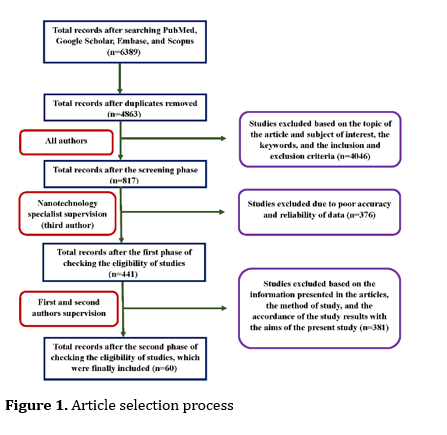
Subsequently, the Rayyan software was used to remove duplicates, and 4863 English articles entered the screening phase. In the screening phase, first, all the articles were evaluated based on the topic of the article and subject of interest, the keywords, and the inclusion and exclusion criteria by all authors. The inclusion criteria were the year of publication, the relevance of the subject, and the aims of the articles. The exclusion criteria included articles with unrelated information and topics, articles published before 2010, and case reports. According to the mentioned criteria and keywords, 817 articles were selected and reviewed.
After the screening phase, evaluation of the eligibility of the studies was conducted by all four authors. In the beginning, an individual specialized in the field of nanotechnology (third author) investigated the accuracy and reliability of the data regarding nanotechnology. In this phase, 376 articles which lacked methodological clarity on nanobot applications in dental procedures were eliminated. In the next phase, other authors (first and second authors) evaluated the value of the information presented in the articles, the method of study, and the accordance of the study results with the aims of the present research. After this precise review, 212 articles were excluded based on the absence of any information regarding the possible side effects of nanobots in dental treatments. Moreover, 169 articles were excluded due to a lack of information on comparing nanobot applications with the gold standard method in dental procedures. Ultimately, 60 articles entered the study. Figure 1 presents the article selection process.
Background and Aim: Nanotechnology has revolutionized dentistry with the introduction of nanobots. These microscopic devices have shown promising applications in diagnosis, treatment, and preventive dental care. The aim of this study was to explore the diverse applications of nanobots along with artificial intelligence (AI) in different dental specialties, highlighting their advantages, limitations, and future potential.
Materials and Methods: For this comprehensive literature review, a complete query was carried out in PubMed, Google Scholar, Embase, and Scopus databases, and the studies published during 2010-2025 were collected using the keywords "Nanotechnology," "Dentistry," "Robotics," "Nanoparticles," and "Dental Materials." After applying appropriate inclusion and exclusion criteria, 113 English articles were selected and evaluated.
Results: Nanobots demonstrate significant potential across various dental disciplines. In endodontics, they enhance root canal disinfection; while, in periodontics, they facilitate biofilm disruption and tissue regeneration. Restorative dentistry benefits from their integration into filling materials, improving durability and functionality. Orthodontic applications include precisely guided tooth movements and real-time monitoring of the periodontal environment. In oral surgery, nanobots enable precise tissue manipulation and accelerated wound healing. Furthermore, they offer promising capabilities for early diagnosis and targeted drug delivery systems in oral medicine.
Conclusion: Nanobots hold transformative potential in various dental disciplines, offering innovative solutions for improved diagnosis, treatment precision, and patient care. However, further research is needed to address safety concerns, regulatory approvals, ethical issues, and cost-effectiveness before clinical integration. Advancements in nanotechnology and AI may pave the way for the widespread use of nanobots, revolutionizing modern dental practice.
Keywords: Dental Materials; Dentistry; Nanoparticles; Nanotechnology; Robotics
Introduction
Nanotechnology is the science of investigating, designing, manufacturing, combining, and using nanoscale materials, tools, and frameworks, which was first proposed by Nobel laureate Richard Feynman in a speech in 1959 [1]. With the passage of time and familiarity with the properties of nanomaterials, various applications were reported for nanotechnology in different fields. For example, nanotechnology is used in the field of medicine to transfer medicine, heat, and cold to a target cell, such as a cancer cell. Nonetheless, in the field of dentistry, nanotechnology is used for procedures such as remineralization of teeth, desensitization of dentin, single-session orthodontic treatment, increasing the quality of sealers in root canal treatment, impression materials, tissue reconstruction, and maintaining oral health [2,3]. In other words, nanomaterials, nano-biotechnology, and nanobots, as sub-branches of nanotechnology, have the potential to improve treatment results and oral health by improving preventive, diagnostic, and therapeutic processes [4]. Nanobots are an emerging subfield of nanotechnology in dentistry, involving microscopic machines employed to execute specialized tasks. The dimensions of nanobots are about 0.5 to 3 µm, and an external diamond coating protects them from being attacked by the immune system. Nanobots are controlled by computers, and a large number of them are needed to perform microscopic and macroscopic tasks [5]. Nowadays, nanobots are used at the atomic, cellular, and molecular levels in both medical and dental fields. In the field of medicine, nanobots can help establish and create resistance of the human body against pathogens; while in dentistry, nanobots have been integrated into many specialties, including endodontics, periodontics, and orthodontics, resulting in expedited treatment processes [5,6]. However, it is important to acknowledge that numerous challenges impede the widespread implement-ation of nanobots in dentistry [7]. For this purpose, this study aimed to investigate nanobots and their clinical applications across several dental domains, the integration of nanobots with artificial intelligence (AI), and to assess the benefits and drawbacks of this novel technology along with its future prospects.
Materials and Methods
In this comprehensive review, first, an electronic search on multiple databases, including PubMed, Google Scholar, Embase, and Scopus was carried out using the following Boolean descriptors and operators:
("Dentistry"[Mesh] OR "Dental Care"[Mesh] OR "Stomatognathic Diseases"[Mesh] OR "Oral Health"[Mesh] OR "Dental Public Health"[Mesh] OR "Preventive Dentistry"[Mesh] OR "Endodontics"[Mesh] OR "Root Canal Therapy"[Mesh] OR "Dental Pulp Disea-ses"[Mesh] OR "Periodontics"[Mesh] OR "Periodontal Diseases"[Mesh] OR "Gingival Diseases"[Mesh] OR "Dental Plaque"[Mesh] OR "Orthodontics"[Mesh] OR "Tooth Movement Techniques"[Mesh] OR "Malocclusion"[Mesh] OR "Oral Surgical Procedures"[Mesh] OR "Tooth Extraction"[Mesh] OR "Dental Implants"[Mesh] OR "Prosthodontics"[Mesh] OR "Dental Prosthesis"[Mesh] OR "Dental Restoration, Permanent"[Mesh] OR "Dental Materials"[Mesh] OR "Oral Medicine"[Mesh] OR "Oral Pathology"[Mesh] OR "Mouth Diseases"[Mesh] OR "Orofacial Pain"[Mesh] OR "Pediatric Dentistry"[Mesh] OR "Dental Hygiene"[Mesh] OR "Irrigation"[Mesh])
AND
("Nanotechnology" [Mesh] OR "Nanoparticles" [Mesh] OR "Robotics "[Mesh] OR "Artificial Intelligence "[Mesh])
NOT
("Mouth Neoplasms"[Mesh])
Subsequently, the Rayyan software was used to remove duplicates, and 4863 English articles entered the screening phase. In the screening phase, first, all the articles were evaluated based on the topic of the article and subject of interest, the keywords, and the inclusion and exclusion criteria by all authors. The inclusion criteria were the year of publication, the relevance of the subject, and the aims of the articles. The exclusion criteria included articles with unrelated information and topics, articles published before 2010, and case reports. According to the mentioned criteria and keywords, 817 articles were selected and reviewed.
After the screening phase, evaluation of the eligibility of the studies was conducted by all four authors. In the beginning, an individual specialized in the field of nanotechnology (third author) investigated the accuracy and reliability of the data regarding nanotechnology. In this phase, 376 articles which lacked methodological clarity on nanobot applications in dental procedures were eliminated. In the next phase, other authors (first and second authors) evaluated the value of the information presented in the articles, the method of study, and the accordance of the study results with the aims of the present research. After this precise review, 212 articles were excluded based on the absence of any information regarding the possible side effects of nanobots in dental treatments. Moreover, 169 articles were excluded due to a lack of information on comparing nanobot applications with the gold standard method in dental procedures. Ultimately, 60 articles entered the study. Figure 1 presents the article selection process.
Figure 1. Article selection process
Results
The search strategy resulted in selection of 60 English articles, including 40 from PubMed, 13 from Google Scholar, 2 from Embase, and 5 from Scopus. After a comprehensive review of the literature, it was observed that 15 articles were focused on the overall concept of nanobots and their structure. Subsequently, 45 other articles illustrated the application of nanobots in different branches of dentistry, their combination with AI, and their limitations. Out of 45 articles assessing nanobot applications in various procedures, 9 articles were regarding diagnosis and treatment of oral and dental diseases, 9 articles were about periodontology, 2 articles were related to endodontics, 4 articles were about orthodontics, 4 articles focused on restorative dentistry, 6 articles were related to oral surgery, 5 articles were related to the combination of nanobots with AI, and ultimately 6 articles discussed nanobots' limitations.
Discussion
The nanobots that have entered the world of dentistry today are devices with a diameter of 0.5-3 µm, which contain parts with dimensions of 1-100 nm, and are capable of converting different types of energy into mechanical power by their motor. Several elements, such as carbon, hydrogen, sulfur, oxygen, nitrogen, silicon, and fluorine, are involved in making nanobots, the most important of which is carbon in the form of diamonds to cover their outer surface. This external surface, made of carbon, is inactive and smooth, causing chemical inertness and reducing the response of the immune system to it. For this reason, nanobots do not stimulate the inflammatory and immune systems, and can easily affect or even penetrate the target cells [8,9].
The main components of nanobots include camera, payload, capacitor, and swimming tail, which can be placed next to each other in various designs. One of the most common designs is called a multi-armed spider-like arrangement, which provides the possibility of fast performance of tasks and multitasking. In this design, the capacitor, which occupies the most space inside the nanobot, plays the role of the energy storage unit of the nanobot. Next to the capacitor is the payload, which contains the drug dose needed for the target tissue. In front of the device, a camera is installed by the operator to observe the events of the surrounding environment, and the whole nanobot system moves in the body by the swimming tail located in the back [10].
There are some additional parts in a nanobot structure, like electrodes, lasers, and ultrasonic signal generators. Two electrodes could be mounted on a nanobot, conferring the ability to kill cancer cells by producing an electric current, elevating the cell's temperature until it ceases to function. The connected electrodes might generate a battery utilizing the electrolytes present in the blood [11]. On the other hand, lasers have the capability to incinerate undesirable substances such as artery plaque, blood clots, or cancer cells. It would effectively evaporate the tissue [12]. Nonetheless, microwave emitters and ultrasonic signal generators are utilized to eliminate cells, such as malignant cells, without causing their rupture. Utilizing precisely calibrated microwaves or ultrasonic signals, a nanobot might disrupt the chemical connections within a malignant cell; thus, eliminating it without compromising the integrity of the cell membrane [13].
The energy required by nanobots is provided through the metabolism of glucose or oxygen, or through the conversion of environmental sound energy into electrical energy. This electrical energy produced in nanobots is used for their function in the body, and its excess amount is stored in the capacitor for future processes. On the other hand, nanobots may contain internal processors to perform their tasks in the body, or they may be pre-programmed, or they may receive orders from external signals and perform their activities [10,14]. When a nanobot is pre-programmed and receives directives, it contains a nano-computer that executes functions such as command receiving, signaling, communication, response to various tracking devices, and maintenance of the proper operation of mechanical nano-parts. Ultimately, the nanobots are eliminated after executing their designated function in the body via the excretory pathways or the scavenger system, comprising macrophages, enzymes, and antioxidants [15].
Currently, advancements in science have introduced nanobots into dentistry, enhancing treatment outcomes. Furthermore, nanobots have distinct impacts and uses across many different fields of dentistry, establishing a foundation for further investigation [1,2]. Consequently, the impacts of nanobots across many different fields of dentistry, as evidenced by several studies, have been explored comprehensively.
Diagnosis and treatment of oral and dental diseases
Modern dentistry emphasizes prevention, with early diagnosis being crucial. Nanobots, primarily through nano-biosensors, offer significant potential for non-invasive and early detection of biological markers such as specific bacteria, proteins, and inflammatory indicators, enabling diagnosis at a molecular level far earlier than traditional methods. These systems can detect early indicators of caries, periodontal disease, and oral cancer, allowing for prompt intervention [16,17].
Beyond diagnosis, nanobots are transformative for therapeutic applications. A primary function is targeted drug delivery, which is applicable across dental specialties. They can be deployed to administer anti-inflammatory agents (e.g., corticosteroids) directly to sites of inflammation, reducing tissue damage [18]. Furthermore, they show promise for regenerative dentistry by delivering growth factors (e.g., platelet-derived growth factor, bone morphogenetic proteins) to precisely facilitate the regeneration of bone, cementum, and periodontal ligament [19].
Furthermore, nanobots are particularly adept at targeting cancer cells. They can bind to biomarkers overexpressed in oral cancers (e.g., EGFR, CD44) to highlight tumor locations for diagnosis or to deliver chemotherapeutic agents directly, minimizing damage to healthy tissues [20]. While promising in vitro and in vivo studies exist [20-22], research specifically focused on oral tumors remains scarce, indicating a critical area for future investigations [23].
Finally, nanobots offer a novel solution for local anesthesia. A concept proposes that a colloidal suspension of nanobots could be injected into the gingiva, guided to the pulp via dentinal tubules to temporarily block sensory nerve function. This would provide rapid, reversible, and highly specific anesthesia for one single tooth, potentially reducing patient anxiety and side effects associated with conventional injections [24].
Periodontology
Nanobots offer numerous advantages in the diagnosis and early detection of periodontal disorders. Nanobots possess the capability to detect bacterial biofilms through their biosensors. They can administer medications and specific antibiotics directly into these biofilms, especially targeting resistant strains to enhance therapeutic efficacy. Conversely, as they can be designed, they will eliminate specific pathogens without harming beneficial oral microorganisms [25].
These nano-biosensors can be utilized for diagnosing periodontal disease, which affects around 20-50% of the global population. Various methods exist for diagnosing periodontal disease, such as determining sodium ion concentrations in gingival crevicular fluid to determine whether the disease is progressive or is in its initial stages [26]. Additionally, titanium biosensors can assess the levels of Streptococcus gordonii, a contributor to periodontal disease and caries. These biosensors can also be utilized in conjunction with fluorescence to identify other pathogenic bacteria, including Staphylococcus aureus and Salmonella typhimurium. In this way, salivary biomarkers are effective for diagnostic purposes [27].
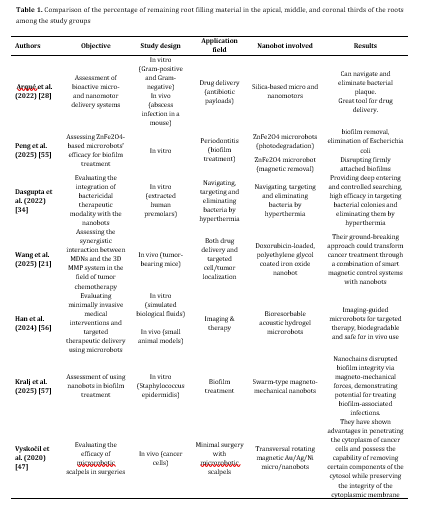
These small devices, loaded with antimicrobial agents, can efficiently target and eliminate bacterial biofilms, therefore reducing the risk of chronic infections. Also, they possess the ability to deliver medications, such as antibiotics or anti-inflammatory agents, directly to the infected site [28]. As an example, Arqué et al. [28] used micro- and nanomotors in order to convey antibiotic payloads to the designated region. Their silica-based robots exhibited favorable outcomes in both in vitro and in vivo conditions. They utilized diverse varieties of Gram-positive and Gram-negative types of bacteria in their in vitro study, and robots broke down their membranes. In this study, the in vivo condition involved an abscess infection in a mouse model. The authors determined that these bots possess numerous advantages, can navigate and eliminate bacterial plaque, and serve as vital tools for drug delivery to resistant biofilms [28].
On the other hand, Peng et al. [29] assessed the efficacy of microrobots in biofilm treatment through two strategies: the photodegradation of biofilms using ZnFe2O4 microrobots and the magnetic removal of biofilms by ZnFe2O4 microrobots. Both possess unique functions; light-driven microrobots demonstrated biofilm removal and the capacity to eliminate Escherichia coli via reactive oxygen species, with active motion. Furthermore, magnetically controlled microrobots demonstrated a consistent efficacy in physically disrupting firmly attached biofilms. Ultimately, they showed optimal efficacy and potential of microrobot as a vital component of future treatments [29].
In another investigation, Mayorga-Martinez et al. [30] assessed the various movements of magnetic microrobots made of halloysite nanotubes coated with iron oxide and polyethylenimine for delivering and stabilizing ampicillin. Microrobots were employed on colonized biofilm on a titanium mesh, resulting in the disruption of Staphylococcus aureus and the enhancement of the effectiveness of antibiotics for bone regeneration [30].
One of the primary causes of periodontal disease is poor oral hygiene, which can be mitigated through tooth brushing and dental check-ups; nanobots offer potential remedies for this issue as well [31]. For this case, dentifrobots have been introduced, which are placed under the occlusal area and are applied with mouthwashes or toothpastes. Moreover, nanobots have the ability to distinguish between different types of cells by analyzing their surface antigens [32]. These nanobots can protect the supra- and subgingival areas when utilized daily. They reduce trapped organic materials into innocuous chemicals and harmless gases. Thus, they contribute to biofilm reduction. They can additionally identify and eliminate detrimental microorganisms within the plaque. These mechanical devices are automatically deactivated upon ingestion. Additionally, robot toothpaste can reduce halitosis by modifying bacterial metabolism [33].
Endodontics
As previously stated, nanobots possess the capability to identify biological markers, which may include bacteria, healthy or injured tissue, and various inflammation markers. These abilities might be useful in the field of endodontics. Nanobots can be designed to navigate the complex anatomy of root canals, reaching areas unreachable by traditional instruments [34]. Furthermore, in situations where pulp regeneration is a goal, nanobots could administer stem cells or growth factors to the root canal, facilitating tissue repair and regeneration. This method could potentially restore the vitality of the dental pulp, avoiding the necessity for conventional root canal therapy [35].
In a study by Dasgupta et al. [34], researchers explored the use of magnetically driven nanobots to effectively disinfect dentinal tubules, which are difficult to reach with conventional methods. They constructed nanobots consisting of silica and iron, with the ability to act utilizing a 3D magnetic manipulation platform, allowing them to navigate the intricate and restricted geometry of dentinal tubules. These nanobots are capable of penetrating as deep as 2000 μm, providing deep insertion and controlled searching, so as to provide accurate distribution of antibacterial chemicals. In addition, authors reported that the nanobots exhibited high efficacy in targeting bacterial colonies, such as Enterococcus faecalis, a prevalent cause of endodontic reinfection. They incorporated hyperthermia therapy, employing localized heat to eliminate bacteria while preserving the surrounding tissue. This strategy reduced the likelihood of antibiotic resistance and improved treatment results. Overall, the research emphasized the capacity of nanobots to transform endodontic therapy by offering a more efficient, precise, and minimally invasive approach for root canal disinfection, consequently diminishing the probability of treatment failure [34].
Orthodontics
Nanobots can enhance, optimize, and improve the precision of orthodontic treatments. By manipulating periodontal tissues, including the gingiva, periodontal ligament, cementum, and alveolar bone, they enable the rapid and painless leveling and alignning, rotation, and vertical repositioning of teeth within minutes to hours [36,37].
This procedure involves the injection of nanobots at the site of tooth movement or the use of OptiFlex infused with nanocomposite materials that release the nanobots in the nearby area of the tooth. This procedure facilitates the rapid movement of teeth through the induction of electrical or acoustic energy, which enhances cellular enzyme function (phosphorylation) and stimulates the secretion of fibroblast growth factor from a macrophage-like cell line, while also eliminating necrotic tissue utilizing a nanobot [38,39].
In orthodontics, nanobots may also be utilized to regulate the stress exerted on teeth by brackets. They are utilized for remote monitoring to evaluate treatment adherence and efficacy, as well as oral health changes, and they can also establish a foundation for calculating individualized usage duration for mobile devices, resulting in enhanced efficiency and decreased treatment duration [39].
Restorative dentistry
Nanobots have numerous applications in restorative dentistry, aiding practitioners in providing patients with durable restorations and enhanced comfort, including reduced sensitivity. Dental damage could be repaired by nanobots through the reconstruction of enamel or dentin, which could be utilized for treatment of caries, repair of cracks, and even regeneration of lost teeth. They could potentially regenerate damaged enamel by delivering minerals directly to the damaged area, promoting natural remineralization, and preventing cavity development. Furthermore, nanobots may promote dentin regeneration to repair damage resulting from cavities or trauma [40].
Nanobots can be added to dental materials to facilitate self-healing capabilities. Nanobots are capable of detecting micro-cracks or damage within materials and autonomously releasing healing agents to repair such damage, thereby prolonging the lifespan of dental restorations. Additionally, they can provide remineralizing agents to tooth surfaces or antibacterial agents to inhibit secondary caries around dental restorations, thus improving the longevity of dental materials. Additionally, nanobots can improve bond strength and decrease the likelihood of debonding over time through the precise application of adhesives at the nanoscale [40,41].
Dentin hypersensitivity is a prevalent issue among several people and may arise spontaneously or following scaling and root planing procedures. Home therapies for this issue are ineffective in the short term. Hypersensitivity occurs due to changes in the resulting hydrodynamic pressure transmitted to the pulp. Dentinal tubules in sensitive teeth are twice the length and 8 times the surface area of non-sensitive teeth [42]. Regenerative nanobots have solutions for this. They have the potential to fully occupy dentinal tubules within a few moments. This causes immediate treatment and relief for the patient. When reaching the dentin, these nanobots enter the dentinal tubules 1 to 4 µm long and move towards the pulp, which is controlled by the dentist through a chemical gradient with onboard nano-computers. The total path length of 10 mm from the surface of the tooth to the pulp is estimated at an average speed of 100 µm per second, and the nanobots reach the pulp of the tooth in approximately 100 seconds [43].
Oral surgery
Nanobots have demonstrated significant potential in the field of dental surgery. Surgical nanobots can participate in diagnosis, treatment, and drug delivery, which makes them very beneficial for therapeutic interventions. Surgical nanobots are being used inside the human body with the utilization of an onboard computer. The most important functions of these nanobots are accurate diagnosis, and precise removal of diseased or damaged tissues without harming healthy surrounding structures. This targeted tissue removal could be particularly useful in procedures like tumor extraction or periodontal disease treatment, with greater accuracy and fewer side effects than traditional surgery. They can also be programmed for a wide range of surgical-related tasks, including tissue biopsy and blood clot removal [44,45].
Moreover, nanobots can accelerate wound healing in dental procedures by administering specific therapeutic materials, including growth factors or antimicrobial agents, directly to the wound site. Thus, they could enhance tissue regeneration and minimize risks of infection. Their accuracy and regulated release enhance recovery efficacy and boost surgical results [44].
Due to the minimally invasive nature of these surgical nanobots, they operate at high speed and with fewer complications, such as bleeding, infection, and nerve damage, and usually cause no pain for patients [46]. In this regard, the accuracy of incisions is crucial, and innovations in nanobot technology facilitate the achievement of microscale dimensions with the use of micro and nanobots as scalpels. Vyskočil et al. [47] investigated Au/Ag/Ni microrobotic scalpels that were controlled by a magnetic field and transversely navigated within that area. They demonstrated advantages in penetrating the cytoplasm of cancer cells and possessed the capability of removing certain components of the cytosol while preserving the integrity of the cytoplasmic membrane [47].
Moreover, titanium miniplates are essential for fixing facial bone fractures in oral procedures. Nonetheless, these plates may be related to biofilm formation, which can result in significant inflammation. Ussia et al. [48] assessed the efficacy of nanobots against biofilms cultured on plates designed to resemble oral cavity conditions. They utilized light-driven, self-propelled nanobots made of tubular black-TiO2/Ag. They bombarded tiny plates with UV, green, and blue light, resulting in varied motion behaviors in bots. Ultimately, they concluded that these nanobots were successful for the treatment of infected titanium mini-plates [48].
Additionally, there exists the potential of the creation and execution of bio-autolocks, including complete replacement of teeth with nanobots in the forthcoming period. Tissue engineering, regenerative engineering, and genetic engineering techniques are employed for comprehensive dental restorations. Nanobotics facilitates the construction and implantation of biological autologs for comprehensive tooth replacement, utilizing both mineral and dental cellular components [49].
Combination of nanobots and AI
As previously stated on the numerous capabilities of nanobots, the necessity for human monitoring for maneuvering them, enabling drug delivery, and other functions such as cellular repair, disease diagnosis, and treatment is highlighted. Currently, attempts are made to employ AI in many various aspects of human lives, particularly in the medical field. Nanotechnology and nanobots are no exception; numerous studies have simulated nanobots employing AI to identify specific cells and deliver medications to them [50,51]. The capabilities of AI-enhanced nanobots may facilitate advancements in navigation and targeting, real-time adaptability, continuous monitoring exceeding human abilities, processing of data and drug delivery, cell control, organ-on-chip systems, biopsy and precision surgery, and implanting procedures [52,53].
In a study conducted by Balusamy et al, [54] the authors investigated the capabilities of an AI-enabled autonomous nanobot for diagnosing and treating hematological disorders, particularly low blood oxygen levels and blood clots, within a simulation-based system. Following the design and development of nanobots able to target hematological disorders, they employed stochastic gradient descent and kernel space to regulate and monitor the nanobots for early detection and intervention. Ultimately, they employed COSMOL and MATLAB to simulate the workings of nanobots and the efficacy of their AI model. While additional in vitro and in vivo investigations are required, it has been determined that AI and nanobotics possess the potential to improve the management of blood disorders. The suggested semi-supervised learning model presents an acceptable answer to challenges caused by inadequate information for training [54].
Despite the limited availability of studies on AI-enhanced nanobots, recent publications and research on nanobots in dentistry or AI in dentistry may facilitate the collaboration of these technologies [54]. A summary of new studies on the application of nanobots in dentistry can be seen in Table 1.
Challenges, risks, and future prospects of nanobots
Although nanobots have the potential to completely revolutionize dentistry, there may be several risks and difficulties in their development and application. There are several challenges related to nanobots, like design, control, expense, and ethical problems. In other words, it is a great challenge to build nanobots that can carry out intricate tasks in the oral cavity and are also compatible with living cells. Indeed, it should be ensured that nanobots will not be harmful and cause untoward responses within the body and are stable. Additionally, nanobots must be biocompatible, non-degradable, and capable of propulsion in a multi-dimensional environment. In fact, more efficient strategies for targeting and controlling them to their desired places must be invented by scientists [55,56].
Supplying enough power for the movement of nanobots inside the body is a major challenge as well. Current methods like magnetic fields or ultrasound are not very precise, and can also cause side effects. Moreover, nanobot manufacturing is costly, making large-scale use impossible. Scalability is also a problem since mass production of very tiny devices is not yet possible [57].
The use of nanobots boldly raises ethical concerns around safety, misuse potential, and long-term effects on the human body and well-being. Several regulations and firm guidelines have to be taken to ensure safety. These include rigorous safety testing to ensure that nanobots biodegrade safely, strong cybersecurity to prevent malicious hacking, and international cooperation to create universal standards. Ultimately, clear oversight paired with public dialogue is essential to prioritize human dignity as this technology advances [58].
Besides the challenges, nanobots will induce inflammation or other negative responses if the immune system recognizes them as a foreign body. For the reason of reducing immunological reactions, intentional surface design and modification are necessary. Since there is no experiment to show the outcomes of long-term studies, the long-term health consequences of nanobot exposure are not known. In order to gauge risks and protect health, comprehensive research and observation must be undertaken [59,60].
Results
The search strategy resulted in selection of 60 English articles, including 40 from PubMed, 13 from Google Scholar, 2 from Embase, and 5 from Scopus. After a comprehensive review of the literature, it was observed that 15 articles were focused on the overall concept of nanobots and their structure. Subsequently, 45 other articles illustrated the application of nanobots in different branches of dentistry, their combination with AI, and their limitations. Out of 45 articles assessing nanobot applications in various procedures, 9 articles were regarding diagnosis and treatment of oral and dental diseases, 9 articles were about periodontology, 2 articles were related to endodontics, 4 articles were about orthodontics, 4 articles focused on restorative dentistry, 6 articles were related to oral surgery, 5 articles were related to the combination of nanobots with AI, and ultimately 6 articles discussed nanobots' limitations.
Discussion
The nanobots that have entered the world of dentistry today are devices with a diameter of 0.5-3 µm, which contain parts with dimensions of 1-100 nm, and are capable of converting different types of energy into mechanical power by their motor. Several elements, such as carbon, hydrogen, sulfur, oxygen, nitrogen, silicon, and fluorine, are involved in making nanobots, the most important of which is carbon in the form of diamonds to cover their outer surface. This external surface, made of carbon, is inactive and smooth, causing chemical inertness and reducing the response of the immune system to it. For this reason, nanobots do not stimulate the inflammatory and immune systems, and can easily affect or even penetrate the target cells [8,9].
The main components of nanobots include camera, payload, capacitor, and swimming tail, which can be placed next to each other in various designs. One of the most common designs is called a multi-armed spider-like arrangement, which provides the possibility of fast performance of tasks and multitasking. In this design, the capacitor, which occupies the most space inside the nanobot, plays the role of the energy storage unit of the nanobot. Next to the capacitor is the payload, which contains the drug dose needed for the target tissue. In front of the device, a camera is installed by the operator to observe the events of the surrounding environment, and the whole nanobot system moves in the body by the swimming tail located in the back [10].
There are some additional parts in a nanobot structure, like electrodes, lasers, and ultrasonic signal generators. Two electrodes could be mounted on a nanobot, conferring the ability to kill cancer cells by producing an electric current, elevating the cell's temperature until it ceases to function. The connected electrodes might generate a battery utilizing the electrolytes present in the blood [11]. On the other hand, lasers have the capability to incinerate undesirable substances such as artery plaque, blood clots, or cancer cells. It would effectively evaporate the tissue [12]. Nonetheless, microwave emitters and ultrasonic signal generators are utilized to eliminate cells, such as malignant cells, without causing their rupture. Utilizing precisely calibrated microwaves or ultrasonic signals, a nanobot might disrupt the chemical connections within a malignant cell; thus, eliminating it without compromising the integrity of the cell membrane [13].
The energy required by nanobots is provided through the metabolism of glucose or oxygen, or through the conversion of environmental sound energy into electrical energy. This electrical energy produced in nanobots is used for their function in the body, and its excess amount is stored in the capacitor for future processes. On the other hand, nanobots may contain internal processors to perform their tasks in the body, or they may be pre-programmed, or they may receive orders from external signals and perform their activities [10,14]. When a nanobot is pre-programmed and receives directives, it contains a nano-computer that executes functions such as command receiving, signaling, communication, response to various tracking devices, and maintenance of the proper operation of mechanical nano-parts. Ultimately, the nanobots are eliminated after executing their designated function in the body via the excretory pathways or the scavenger system, comprising macrophages, enzymes, and antioxidants [15].
Currently, advancements in science have introduced nanobots into dentistry, enhancing treatment outcomes. Furthermore, nanobots have distinct impacts and uses across many different fields of dentistry, establishing a foundation for further investigation [1,2]. Consequently, the impacts of nanobots across many different fields of dentistry, as evidenced by several studies, have been explored comprehensively.
Diagnosis and treatment of oral and dental diseases
Modern dentistry emphasizes prevention, with early diagnosis being crucial. Nanobots, primarily through nano-biosensors, offer significant potential for non-invasive and early detection of biological markers such as specific bacteria, proteins, and inflammatory indicators, enabling diagnosis at a molecular level far earlier than traditional methods. These systems can detect early indicators of caries, periodontal disease, and oral cancer, allowing for prompt intervention [16,17].
Beyond diagnosis, nanobots are transformative for therapeutic applications. A primary function is targeted drug delivery, which is applicable across dental specialties. They can be deployed to administer anti-inflammatory agents (e.g., corticosteroids) directly to sites of inflammation, reducing tissue damage [18]. Furthermore, they show promise for regenerative dentistry by delivering growth factors (e.g., platelet-derived growth factor, bone morphogenetic proteins) to precisely facilitate the regeneration of bone, cementum, and periodontal ligament [19].
Furthermore, nanobots are particularly adept at targeting cancer cells. They can bind to biomarkers overexpressed in oral cancers (e.g., EGFR, CD44) to highlight tumor locations for diagnosis or to deliver chemotherapeutic agents directly, minimizing damage to healthy tissues [20]. While promising in vitro and in vivo studies exist [20-22], research specifically focused on oral tumors remains scarce, indicating a critical area for future investigations [23].
Finally, nanobots offer a novel solution for local anesthesia. A concept proposes that a colloidal suspension of nanobots could be injected into the gingiva, guided to the pulp via dentinal tubules to temporarily block sensory nerve function. This would provide rapid, reversible, and highly specific anesthesia for one single tooth, potentially reducing patient anxiety and side effects associated with conventional injections [24].
Periodontology
Nanobots offer numerous advantages in the diagnosis and early detection of periodontal disorders. Nanobots possess the capability to detect bacterial biofilms through their biosensors. They can administer medications and specific antibiotics directly into these biofilms, especially targeting resistant strains to enhance therapeutic efficacy. Conversely, as they can be designed, they will eliminate specific pathogens without harming beneficial oral microorganisms [25].
These nano-biosensors can be utilized for diagnosing periodontal disease, which affects around 20-50% of the global population. Various methods exist for diagnosing periodontal disease, such as determining sodium ion concentrations in gingival crevicular fluid to determine whether the disease is progressive or is in its initial stages [26]. Additionally, titanium biosensors can assess the levels of Streptococcus gordonii, a contributor to periodontal disease and caries. These biosensors can also be utilized in conjunction with fluorescence to identify other pathogenic bacteria, including Staphylococcus aureus and Salmonella typhimurium. In this way, salivary biomarkers are effective for diagnostic purposes [27].
These small devices, loaded with antimicrobial agents, can efficiently target and eliminate bacterial biofilms, therefore reducing the risk of chronic infections. Also, they possess the ability to deliver medications, such as antibiotics or anti-inflammatory agents, directly to the infected site [28]. As an example, Arqué et al. [28] used micro- and nanomotors in order to convey antibiotic payloads to the designated region. Their silica-based robots exhibited favorable outcomes in both in vitro and in vivo conditions. They utilized diverse varieties of Gram-positive and Gram-negative types of bacteria in their in vitro study, and robots broke down their membranes. In this study, the in vivo condition involved an abscess infection in a mouse model. The authors determined that these bots possess numerous advantages, can navigate and eliminate bacterial plaque, and serve as vital tools for drug delivery to resistant biofilms [28].
On the other hand, Peng et al. [29] assessed the efficacy of microrobots in biofilm treatment through two strategies: the photodegradation of biofilms using ZnFe2O4 microrobots and the magnetic removal of biofilms by ZnFe2O4 microrobots. Both possess unique functions; light-driven microrobots demonstrated biofilm removal and the capacity to eliminate Escherichia coli via reactive oxygen species, with active motion. Furthermore, magnetically controlled microrobots demonstrated a consistent efficacy in physically disrupting firmly attached biofilms. Ultimately, they showed optimal efficacy and potential of microrobot as a vital component of future treatments [29].
In another investigation, Mayorga-Martinez et al. [30] assessed the various movements of magnetic microrobots made of halloysite nanotubes coated with iron oxide and polyethylenimine for delivering and stabilizing ampicillin. Microrobots were employed on colonized biofilm on a titanium mesh, resulting in the disruption of Staphylococcus aureus and the enhancement of the effectiveness of antibiotics for bone regeneration [30].
One of the primary causes of periodontal disease is poor oral hygiene, which can be mitigated through tooth brushing and dental check-ups; nanobots offer potential remedies for this issue as well [31]. For this case, dentifrobots have been introduced, which are placed under the occlusal area and are applied with mouthwashes or toothpastes. Moreover, nanobots have the ability to distinguish between different types of cells by analyzing their surface antigens [32]. These nanobots can protect the supra- and subgingival areas when utilized daily. They reduce trapped organic materials into innocuous chemicals and harmless gases. Thus, they contribute to biofilm reduction. They can additionally identify and eliminate detrimental microorganisms within the plaque. These mechanical devices are automatically deactivated upon ingestion. Additionally, robot toothpaste can reduce halitosis by modifying bacterial metabolism [33].
Endodontics
As previously stated, nanobots possess the capability to identify biological markers, which may include bacteria, healthy or injured tissue, and various inflammation markers. These abilities might be useful in the field of endodontics. Nanobots can be designed to navigate the complex anatomy of root canals, reaching areas unreachable by traditional instruments [34]. Furthermore, in situations where pulp regeneration is a goal, nanobots could administer stem cells or growth factors to the root canal, facilitating tissue repair and regeneration. This method could potentially restore the vitality of the dental pulp, avoiding the necessity for conventional root canal therapy [35].
In a study by Dasgupta et al. [34], researchers explored the use of magnetically driven nanobots to effectively disinfect dentinal tubules, which are difficult to reach with conventional methods. They constructed nanobots consisting of silica and iron, with the ability to act utilizing a 3D magnetic manipulation platform, allowing them to navigate the intricate and restricted geometry of dentinal tubules. These nanobots are capable of penetrating as deep as 2000 μm, providing deep insertion and controlled searching, so as to provide accurate distribution of antibacterial chemicals. In addition, authors reported that the nanobots exhibited high efficacy in targeting bacterial colonies, such as Enterococcus faecalis, a prevalent cause of endodontic reinfection. They incorporated hyperthermia therapy, employing localized heat to eliminate bacteria while preserving the surrounding tissue. This strategy reduced the likelihood of antibiotic resistance and improved treatment results. Overall, the research emphasized the capacity of nanobots to transform endodontic therapy by offering a more efficient, precise, and minimally invasive approach for root canal disinfection, consequently diminishing the probability of treatment failure [34].
Orthodontics
Nanobots can enhance, optimize, and improve the precision of orthodontic treatments. By manipulating periodontal tissues, including the gingiva, periodontal ligament, cementum, and alveolar bone, they enable the rapid and painless leveling and alignning, rotation, and vertical repositioning of teeth within minutes to hours [36,37].
This procedure involves the injection of nanobots at the site of tooth movement or the use of OptiFlex infused with nanocomposite materials that release the nanobots in the nearby area of the tooth. This procedure facilitates the rapid movement of teeth through the induction of electrical or acoustic energy, which enhances cellular enzyme function (phosphorylation) and stimulates the secretion of fibroblast growth factor from a macrophage-like cell line, while also eliminating necrotic tissue utilizing a nanobot [38,39].
In orthodontics, nanobots may also be utilized to regulate the stress exerted on teeth by brackets. They are utilized for remote monitoring to evaluate treatment adherence and efficacy, as well as oral health changes, and they can also establish a foundation for calculating individualized usage duration for mobile devices, resulting in enhanced efficiency and decreased treatment duration [39].
Restorative dentistry
Nanobots have numerous applications in restorative dentistry, aiding practitioners in providing patients with durable restorations and enhanced comfort, including reduced sensitivity. Dental damage could be repaired by nanobots through the reconstruction of enamel or dentin, which could be utilized for treatment of caries, repair of cracks, and even regeneration of lost teeth. They could potentially regenerate damaged enamel by delivering minerals directly to the damaged area, promoting natural remineralization, and preventing cavity development. Furthermore, nanobots may promote dentin regeneration to repair damage resulting from cavities or trauma [40].
Nanobots can be added to dental materials to facilitate self-healing capabilities. Nanobots are capable of detecting micro-cracks or damage within materials and autonomously releasing healing agents to repair such damage, thereby prolonging the lifespan of dental restorations. Additionally, they can provide remineralizing agents to tooth surfaces or antibacterial agents to inhibit secondary caries around dental restorations, thus improving the longevity of dental materials. Additionally, nanobots can improve bond strength and decrease the likelihood of debonding over time through the precise application of adhesives at the nanoscale [40,41].
Dentin hypersensitivity is a prevalent issue among several people and may arise spontaneously or following scaling and root planing procedures. Home therapies for this issue are ineffective in the short term. Hypersensitivity occurs due to changes in the resulting hydrodynamic pressure transmitted to the pulp. Dentinal tubules in sensitive teeth are twice the length and 8 times the surface area of non-sensitive teeth [42]. Regenerative nanobots have solutions for this. They have the potential to fully occupy dentinal tubules within a few moments. This causes immediate treatment and relief for the patient. When reaching the dentin, these nanobots enter the dentinal tubules 1 to 4 µm long and move towards the pulp, which is controlled by the dentist through a chemical gradient with onboard nano-computers. The total path length of 10 mm from the surface of the tooth to the pulp is estimated at an average speed of 100 µm per second, and the nanobots reach the pulp of the tooth in approximately 100 seconds [43].
Oral surgery
Nanobots have demonstrated significant potential in the field of dental surgery. Surgical nanobots can participate in diagnosis, treatment, and drug delivery, which makes them very beneficial for therapeutic interventions. Surgical nanobots are being used inside the human body with the utilization of an onboard computer. The most important functions of these nanobots are accurate diagnosis, and precise removal of diseased or damaged tissues without harming healthy surrounding structures. This targeted tissue removal could be particularly useful in procedures like tumor extraction or periodontal disease treatment, with greater accuracy and fewer side effects than traditional surgery. They can also be programmed for a wide range of surgical-related tasks, including tissue biopsy and blood clot removal [44,45].
Moreover, nanobots can accelerate wound healing in dental procedures by administering specific therapeutic materials, including growth factors or antimicrobial agents, directly to the wound site. Thus, they could enhance tissue regeneration and minimize risks of infection. Their accuracy and regulated release enhance recovery efficacy and boost surgical results [44].
Due to the minimally invasive nature of these surgical nanobots, they operate at high speed and with fewer complications, such as bleeding, infection, and nerve damage, and usually cause no pain for patients [46]. In this regard, the accuracy of incisions is crucial, and innovations in nanobot technology facilitate the achievement of microscale dimensions with the use of micro and nanobots as scalpels. Vyskočil et al. [47] investigated Au/Ag/Ni microrobotic scalpels that were controlled by a magnetic field and transversely navigated within that area. They demonstrated advantages in penetrating the cytoplasm of cancer cells and possessed the capability of removing certain components of the cytosol while preserving the integrity of the cytoplasmic membrane [47].
Moreover, titanium miniplates are essential for fixing facial bone fractures in oral procedures. Nonetheless, these plates may be related to biofilm formation, which can result in significant inflammation. Ussia et al. [48] assessed the efficacy of nanobots against biofilms cultured on plates designed to resemble oral cavity conditions. They utilized light-driven, self-propelled nanobots made of tubular black-TiO2/Ag. They bombarded tiny plates with UV, green, and blue light, resulting in varied motion behaviors in bots. Ultimately, they concluded that these nanobots were successful for the treatment of infected titanium mini-plates [48].
Additionally, there exists the potential of the creation and execution of bio-autolocks, including complete replacement of teeth with nanobots in the forthcoming period. Tissue engineering, regenerative engineering, and genetic engineering techniques are employed for comprehensive dental restorations. Nanobotics facilitates the construction and implantation of biological autologs for comprehensive tooth replacement, utilizing both mineral and dental cellular components [49].
Combination of nanobots and AI
As previously stated on the numerous capabilities of nanobots, the necessity for human monitoring for maneuvering them, enabling drug delivery, and other functions such as cellular repair, disease diagnosis, and treatment is highlighted. Currently, attempts are made to employ AI in many various aspects of human lives, particularly in the medical field. Nanotechnology and nanobots are no exception; numerous studies have simulated nanobots employing AI to identify specific cells and deliver medications to them [50,51]. The capabilities of AI-enhanced nanobots may facilitate advancements in navigation and targeting, real-time adaptability, continuous monitoring exceeding human abilities, processing of data and drug delivery, cell control, organ-on-chip systems, biopsy and precision surgery, and implanting procedures [52,53].
In a study conducted by Balusamy et al, [54] the authors investigated the capabilities of an AI-enabled autonomous nanobot for diagnosing and treating hematological disorders, particularly low blood oxygen levels and blood clots, within a simulation-based system. Following the design and development of nanobots able to target hematological disorders, they employed stochastic gradient descent and kernel space to regulate and monitor the nanobots for early detection and intervention. Ultimately, they employed COSMOL and MATLAB to simulate the workings of nanobots and the efficacy of their AI model. While additional in vitro and in vivo investigations are required, it has been determined that AI and nanobotics possess the potential to improve the management of blood disorders. The suggested semi-supervised learning model presents an acceptable answer to challenges caused by inadequate information for training [54].
Despite the limited availability of studies on AI-enhanced nanobots, recent publications and research on nanobots in dentistry or AI in dentistry may facilitate the collaboration of these technologies [54]. A summary of new studies on the application of nanobots in dentistry can be seen in Table 1.
Challenges, risks, and future prospects of nanobots
Although nanobots have the potential to completely revolutionize dentistry, there may be several risks and difficulties in their development and application. There are several challenges related to nanobots, like design, control, expense, and ethical problems. In other words, it is a great challenge to build nanobots that can carry out intricate tasks in the oral cavity and are also compatible with living cells. Indeed, it should be ensured that nanobots will not be harmful and cause untoward responses within the body and are stable. Additionally, nanobots must be biocompatible, non-degradable, and capable of propulsion in a multi-dimensional environment. In fact, more efficient strategies for targeting and controlling them to their desired places must be invented by scientists [55,56].
Supplying enough power for the movement of nanobots inside the body is a major challenge as well. Current methods like magnetic fields or ultrasound are not very precise, and can also cause side effects. Moreover, nanobot manufacturing is costly, making large-scale use impossible. Scalability is also a problem since mass production of very tiny devices is not yet possible [57].
The use of nanobots boldly raises ethical concerns around safety, misuse potential, and long-term effects on the human body and well-being. Several regulations and firm guidelines have to be taken to ensure safety. These include rigorous safety testing to ensure that nanobots biodegrade safely, strong cybersecurity to prevent malicious hacking, and international cooperation to create universal standards. Ultimately, clear oversight paired with public dialogue is essential to prioritize human dignity as this technology advances [58].
Besides the challenges, nanobots will induce inflammation or other negative responses if the immune system recognizes them as a foreign body. For the reason of reducing immunological reactions, intentional surface design and modification are necessary. Since there is no experiment to show the outcomes of long-term studies, the long-term health consequences of nanobot exposure are not known. In order to gauge risks and protect health, comprehensive research and observation must be undertaken [59,60].
Table 1. Comparison of the percentage of remaining root filling material in the apical, middle, and coronal thirds of the roots among the study groups
The current research into dental nanobots demonstrated considerable strength through its compelling proof-of-concept studies and interdisciplinary nature. Investigations have successfully established the foundational efficacy of nanobots for targeted tasks, including biofilm eradication on implant surfaces, precise disinfection of complex anatomical sites like dentinal tubules, and targeted delivery of therapeutic agents in simulated environments. Furthermore, the progressive integration of AI is a significant reinforcement, offering a pathway to transform nanobots from pre-programmed tools into adaptive systems capable of autonomous navigation and real-time decision-making, thereby enhancing their diagnostic and therapeutic potential.
However, the field is constrained by significant limitations that hinder clinical translation. A primary constraint is the overwhelming predominance of in vitro and animal studies, with a critical scarcity of human clinical trials. This pre-clinical focus leaves long-term biocompatibility, biodistribution, and potential immune responses largely undefined. Concurrently, substantial technical hurdles persist, including the challenges of achieving precise control within the dynamic oral environment, developing sustainable onboard power sources, and establishing cost-effective, scalable manufacturing processes for these microscopic devices.
Consequently, the research landscape, while promising, remains in a nascent stage. The ultimate clinical integration of nanobots is contingent upon overcoming these translational gaps. Future research must therefore pivot towards comprehensive long-term safety studies, the resolution of persistent technical challenges, and the development of robust ethical and regulatory frameworks to govern the deployment of autonomous systems within the human body.
Conclusion
The integration of AI-driven nanobots in dentistry could revolutionize diagnostic, therapeutic, and preventive care by enabling precise, minimally invasive treatments and real-time monitoring. Despite challenges like cost, technical complexity, and ethical concerns, the combined capabilities of nanobotics and AI hold strong potential to advance personalized, efficient, and patient-centered oral health solutions. Realizing this future will require continued interdisciplinary research and careful attention to safe integration.
Type of Study: Review article |
Subject:
Oral medicine
Send email to the article author
| Rights and permissions | |
 |
This work is licensed under a Creative Commons Attribution-NonCommercial 4.0 International License. |