
Journal of Research in Dental
and Maxillofacial Sciences

Volume 11, Issue 3 (9-2026)
J Res Dent Maxillofac Sci 2026, 11(3): 251-258 |
Back to browse issues page

Ethics code: IR.IAU.DENTAL.REC.1399.208
Clinical trials code: IR.IAU.DENTAL.REC.1399.208


Download citation:
BibTeX | RIS | EndNote | Medlars | ProCite | Reference Manager | RefWorks
Send citation to:


BibTeX | RIS | EndNote | Medlars | ProCite | Reference Manager | RefWorks
Send citation to:
Ghelmani S M, Nahidi R, Zarbakhsh A. Effect of Polishing and Glazing on Microhardness of Monolithic Zirconia, Lithium Disilicate, and Zirconia-Reinforced Lithium Silicate CAD/CAM Ceramics: An In Vitro Study. J Res Dent Maxillofac Sci 2026; 11 (3) :251-258
URL: http://jrdms.dentaliau.ac.ir/article-1-919-en.html
URL: http://jrdms.dentaliau.ac.ir/article-1-919-en.html


1- Department of Prosthodontics, TeMS.C., Islamic Azad University, Tehran, Iran.
2- Department of Prosthodontics, TeMS.C., Islamic Azad University, Tehran, Iran. ,rezanahidi@gmail.com
2- Department of Prosthodontics, TeMS.C., Islamic Azad University, Tehran, Iran. ,
Full-Text [PDF 366 kb]
(6 Downloads)
| Abstract (HTML) (14 Views)
Table 1. Structural composition of ceramics evaluated in this study
Table 2. Heat treatment parameters for the ceramic materials
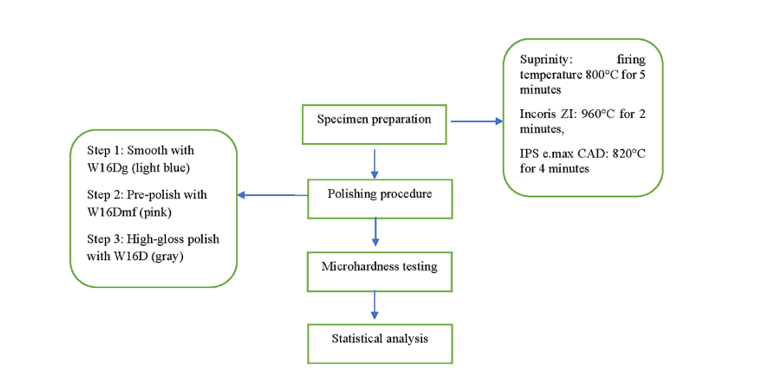
Figure 1. Workflow of the study
Full-Text: (1 Views)
Abstract
Background and Aim: This study aimed to assess the effect of polishing and glazing on microhardness of monolithic zirconia, lithium disilicate (LDS), and zirconia-reinforced lithium silicate (ZLS) computer-aided design/computer-aided manufacturing (CAD/CAM) ceramics.
Materials and Methods: In this in vitro study, square-shaped specimens (10 x 10 x 1 mm) were fabricated from Suprinity, IPS e.max CAD, and Incoris ZI ceramics (n=24 from each). Each group was subdivided into three subgroups (n=8) for (I) glazing, (II) polishing with Diapol Twist kit, and (III) no surface treatment (control). Microhardness was assessed using Vickers hardness tester. Comparisons were made with two-way ANOVA and Tukey’s test (alpha=0.05).
Results: Ceramic type had a significant effect on microhardness (P<0.001) such that Incoris ZI showed the highest, and IPS e.max CAD showed the lowest microhardness (P<0.05). The effect of surface treatment on microhardness was also significant (P<0.001) such that the control group showed the highest and the polishing group showed the lowest microhardness (P<0.05). The interaction effect of ceramic type and surface treatment on microhardness was not significant (P=0.454).
Conclusion: Within the study limitations, the findings showed that the microhardness values differed significantly across groups, and the control group had a higher microhardness than the polishing and glazing groups. The values tended to be higher for Incoris ZI ceramic, indicating that this ceramic may demonstrate greater wear resistance in clinical situations.
Keywords: Computer-Aided Design; Dental Polishing; Hardness; Yttria stabilized tetragonal zirconia
Materials and Methods: In this in vitro study, square-shaped specimens (10 x 10 x 1 mm) were fabricated from Suprinity, IPS e.max CAD, and Incoris ZI ceramics (n=24 from each). Each group was subdivided into three subgroups (n=8) for (I) glazing, (II) polishing with Diapol Twist kit, and (III) no surface treatment (control). Microhardness was assessed using Vickers hardness tester. Comparisons were made with two-way ANOVA and Tukey’s test (alpha=0.05).
Results: Ceramic type had a significant effect on microhardness (P<0.001) such that Incoris ZI showed the highest, and IPS e.max CAD showed the lowest microhardness (P<0.05). The effect of surface treatment on microhardness was also significant (P<0.001) such that the control group showed the highest and the polishing group showed the lowest microhardness (P<0.05). The interaction effect of ceramic type and surface treatment on microhardness was not significant (P=0.454).
Conclusion: Within the study limitations, the findings showed that the microhardness values differed significantly across groups, and the control group had a higher microhardness than the polishing and glazing groups. The values tended to be higher for Incoris ZI ceramic, indicating that this ceramic may demonstrate greater wear resistance in clinical situations.
Keywords: Computer-Aided Design; Dental Polishing; Hardness; Yttria stabilized tetragonal zirconia
Introduction
Dental ceramics have become increasingly important in restorative dentistry for both anterior and posterior restorations due to their incredible esthetics, durability, and clinical efficacy [1,2]. In terms of appearance, these materials are able to mimic the structure of sound natural teeth and are therefore suitable for patients who desire an esthetic restoration [3,4]. Dental ceramics are esthetically pleasing; however, they are fundamentally brittle [5,6]. It means that dental ceramics may break even during clinical service if subjected to excessively high forces created while chewing [7]. Previous literature suggests that the mean chewing forces can vary, ranging from 11 N to 150 N or higher [8]. In extreme cases, forces are documented at the anterior region at over 200 N and up to 1000 N in individuals with parafunctional habits like bruxism [9]. Therefore, dental restorations must be strong and resilient enough to withstand intraoral forces. Knowledge about the mechanical properties of different ceramics is crucial to extend material service life and ensure that a certain dental material can withstand intraoral conditions [10, 11].
In response to a growing demand for metal-free restorations, glass ceramics or reinforced ceramics such as lithium disilicate (LDS), and zirconia-reinforced lithium silicate (ZLS) ceramics were introduced to the market, which are considered an upgraded version of feldspathic ceramics [12-14]. They possess improved mechanical strength due to their structural composition and presence of crystalline materials like leucite and zirconia [12]. The development and use of computer-aided design/computer-aided manufacturing (CAD/CAM) technology has modified the method of fabrication of dental ceramics, allowing for the production of homogenous and standardized ceramic blocks [15,16]. By transitioning to CAD/CAM technology, variations and technical sensitivities related to the conventional method are largely eliminated, resulting in fabrication of restorations with higher quality.
On the other hand, variations in the milling process can create residual stresses in the material, and initiate microcracks and surface defects. These irregularities can affect the mechanical properties and longevity of ceramics, emphasizing the significance and the need for a finishing method to improve properties [17]. Polishing and glazing are two imperative finishing methods that are utilized to improve the esthetic and mechanical properties of CAD/CAM ceramics [1,18]. The polishing techniques play an important role in improving the smoothness of surfaces, which is not only important from an esthetic point of view, but is also imperative to decrease wear of the opposing teeth and plaque build-up [19]. Glazing, on the other hand, applies a protective layer on the ceramic surface that enhances the surface finish, decreases porosities, and increases the resistance of the material to staining and degradation [20]. However, to the best of the authors’ knowledge, no previous study has specifically investigated the effects of polishing and glazing on the microhardness of different types of ceramics. Knowledge about the effect of different polishing and glazing protocols on microhardness and surface roughness of ceramic restorations is imperative for their successful clinical use [1]. Thus, this study aimed to evaluate the effect of polishing and glazing on the microhardness of three different types of CAD/CAM ceramics: monolithic zirconia, LDS, and ZLS in order to better understand their mechanical response following different surface finishing protocols. The null hypothesis of the study was that the microhardness of the tested ceramic materials would not be affected by the type of finishing technique or ceramic type. Gaining a deeper understanding of these interactions is essential for dental clinicians aiming to optimize the clinical performance and longevity of ceramic restorations, ultimately enhancing patient outcomes and satisfaction.
Materials and Methods
In response to a growing demand for metal-free restorations, glass ceramics or reinforced ceramics such as lithium disilicate (LDS), and zirconia-reinforced lithium silicate (ZLS) ceramics were introduced to the market, which are considered an upgraded version of feldspathic ceramics [12-14]. They possess improved mechanical strength due to their structural composition and presence of crystalline materials like leucite and zirconia [12]. The development and use of computer-aided design/computer-aided manufacturing (CAD/CAM) technology has modified the method of fabrication of dental ceramics, allowing for the production of homogenous and standardized ceramic blocks [15,16]. By transitioning to CAD/CAM technology, variations and technical sensitivities related to the conventional method are largely eliminated, resulting in fabrication of restorations with higher quality.
On the other hand, variations in the milling process can create residual stresses in the material, and initiate microcracks and surface defects. These irregularities can affect the mechanical properties and longevity of ceramics, emphasizing the significance and the need for a finishing method to improve properties [17]. Polishing and glazing are two imperative finishing methods that are utilized to improve the esthetic and mechanical properties of CAD/CAM ceramics [1,18]. The polishing techniques play an important role in improving the smoothness of surfaces, which is not only important from an esthetic point of view, but is also imperative to decrease wear of the opposing teeth and plaque build-up [19]. Glazing, on the other hand, applies a protective layer on the ceramic surface that enhances the surface finish, decreases porosities, and increases the resistance of the material to staining and degradation [20]. However, to the best of the authors’ knowledge, no previous study has specifically investigated the effects of polishing and glazing on the microhardness of different types of ceramics. Knowledge about the effect of different polishing and glazing protocols on microhardness and surface roughness of ceramic restorations is imperative for their successful clinical use [1]. Thus, this study aimed to evaluate the effect of polishing and glazing on the microhardness of three different types of CAD/CAM ceramics: monolithic zirconia, LDS, and ZLS in order to better understand their mechanical response following different surface finishing protocols. The null hypothesis of the study was that the microhardness of the tested ceramic materials would not be affected by the type of finishing technique or ceramic type. Gaining a deeper understanding of these interactions is essential for dental clinicians aiming to optimize the clinical performance and longevity of ceramic restorations, ultimately enhancing patient outcomes and satisfaction.
Materials and Methods
This in vitro study was ethically approved under the ethical code IR.IAU.DENTAL. REC.1399.208. Based on a study by Dal Piva et al. [21] and using two-way ANOVA feature of PASS 11, the minimum sample size for each subgroup was determined to be 8 specimens assuming alpha=0.05, beta=0.73, effect size of 0.45, and standard deviation of 0.87.
Specimen preparation:
The study was conducted on 72 square-shaped ceramic specimens fabricated from ZLS (Vita Suprinity; Zanhfabrik, Germany), LDS (IPS e.max CAD; Ivoclar Vivadent, Liechtenstein), and monolithic zirconia (Incoris ZI; Dentsply Sirona, Germany) ceramics with dimensions 1 x 10 x 10 mm (Table 1); 24 specimens of each type of ceramic were fabricated (Table 1). Specimens from each ceramic type (n=24) were evaluated in three subgroups (n=8) of control (no surface treatment), polishing, and glazing.
The blocks were sectioned using a diamond blade at 3000 rpm speed (T201A; Mecatome; Presi Co., France) under sufficient water spray for cooling. After drying, the ZLS specimens were crystallized in a furnace (AutoTherm-100; Kousha Fan Pars, Iran) according to the manufacturer’s instructions (Table 2). the monolithic zirconia specimens were also sintered in a furnace (InFire HTC; Dentsply Sirona, Czech Republic) according to the manufacturer’s instructions (Table 2). All procedures were performed by one technician.
Glazing procedure was then performed on one third of the specimens in all three groups. For IPS e.max CAD, a 1:1 glaze mixture of Empress Glaze Paste (Ivoclar Vivadent AG, Zürich, Switzerland) and Empress Universal Glaze (Ivoclar Vivadent AG, Zürich, Switzerland) was used. For Suprinity, a Vita Akzent Plus Glaze layer (VITA Zahnfabrik, Germany) was used. A high SLU layer was also used for Incoris ZI specimens [17,22]. The workflow of the study is illustrated in Figure 1. For Vita Suprinity glazing, a temperature of 800°C was used for 5 minutes at a speed of 80°C/min and an initial temperature of 400°C. For Incoris ZI, a temperature of 960°C was used for 2 minutes at a speed of 60°C/min and an initial temperature of 500°C. For IPS e.max CAD, a temperature of 820°C was used for 4 minutes at a speed of 65°C/min and an initial temperature of 390°C [17,22].
Specimen preparation:
The study was conducted on 72 square-shaped ceramic specimens fabricated from ZLS (Vita Suprinity; Zanhfabrik, Germany), LDS (IPS e.max CAD; Ivoclar Vivadent, Liechtenstein), and monolithic zirconia (Incoris ZI; Dentsply Sirona, Germany) ceramics with dimensions 1 x 10 x 10 mm (Table 1); 24 specimens of each type of ceramic were fabricated (Table 1). Specimens from each ceramic type (n=24) were evaluated in three subgroups (n=8) of control (no surface treatment), polishing, and glazing.
The blocks were sectioned using a diamond blade at 3000 rpm speed (T201A; Mecatome; Presi Co., France) under sufficient water spray for cooling. After drying, the ZLS specimens were crystallized in a furnace (AutoTherm-100; Kousha Fan Pars, Iran) according to the manufacturer’s instructions (Table 2). the monolithic zirconia specimens were also sintered in a furnace (InFire HTC; Dentsply Sirona, Czech Republic) according to the manufacturer’s instructions (Table 2). All procedures were performed by one technician.
Glazing procedure was then performed on one third of the specimens in all three groups. For IPS e.max CAD, a 1:1 glaze mixture of Empress Glaze Paste (Ivoclar Vivadent AG, Zürich, Switzerland) and Empress Universal Glaze (Ivoclar Vivadent AG, Zürich, Switzerland) was used. For Suprinity, a Vita Akzent Plus Glaze layer (VITA Zahnfabrik, Germany) was used. A high SLU layer was also used for Incoris ZI specimens [17,22]. The workflow of the study is illustrated in Figure 1. For Vita Suprinity glazing, a temperature of 800°C was used for 5 minutes at a speed of 80°C/min and an initial temperature of 400°C. For Incoris ZI, a temperature of 960°C was used for 2 minutes at a speed of 60°C/min and an initial temperature of 500°C. For IPS e.max CAD, a temperature of 820°C was used for 4 minutes at a speed of 65°C/min and an initial temperature of 390°C [17,22].
Table 1. Structural composition of ceramics evaluated in this study
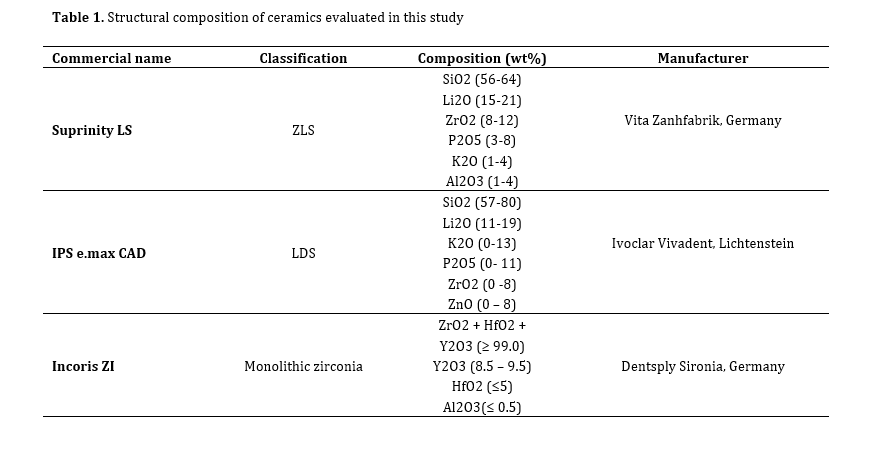
Table 2. Heat treatment parameters for the ceramic materials
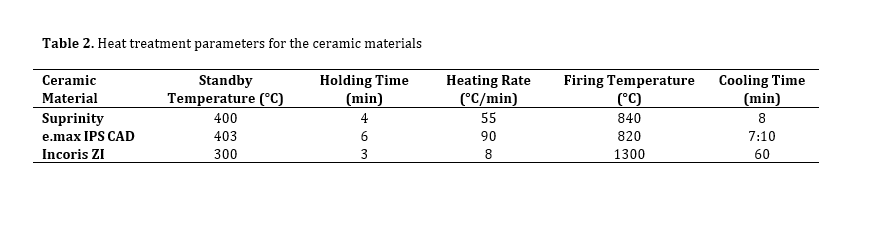
Figure 1. Workflow of the study
Polishing procedure:
One third of the specimens in all three ceramic groups were polished with the Diapol Twist kit (Diapol Twist; EVE Ernst Vetter, Germany) for 15 seconds through a multi-step process. The first step consisted of smoothing with W16Dg (light blue; EVE Diapol; EVE Ernst Vetter, Germany), followed by W16Dmf (pink; EVE Diapol; EVE Ernst Vetter, Germany) for pre-polishing, and then W16D (gray; EVE Diapol; EVE Ernst Vetter, Germany) for high-gloss polishing as instructed by the manufacturer. The recommended speed for the polishing tools was 15,000 rpm with moderate hand pressure for 15 seconds for each tool. The remaining specimens were considered as the control group, and received no polishing or glazing treatment [23].
Microhardness testing:
The specimens were tested in a Vickers hardness tester (Bareiss GmbH, Oberdischingen, Germany). Indentations were made at three points, applying a 15-N force for 20 seconds, and the mean hardness value was calculated and reported [24].
Statistical analysis:
After calculating the mean and standard deviation values, normal distribution of data was evaluated by the Shapiro-Wilk test. Statistical analyses were conducted using two-way ANOVA. For pairwise comparisons, the Tukey’s post-hoc test was applied to determine significant differences between the groups. The significance level was set at 5%.
Results
One third of the specimens in all three ceramic groups were polished with the Diapol Twist kit (Diapol Twist; EVE Ernst Vetter, Germany) for 15 seconds through a multi-step process. The first step consisted of smoothing with W16Dg (light blue; EVE Diapol; EVE Ernst Vetter, Germany), followed by W16Dmf (pink; EVE Diapol; EVE Ernst Vetter, Germany) for pre-polishing, and then W16D (gray; EVE Diapol; EVE Ernst Vetter, Germany) for high-gloss polishing as instructed by the manufacturer. The recommended speed for the polishing tools was 15,000 rpm with moderate hand pressure for 15 seconds for each tool. The remaining specimens were considered as the control group, and received no polishing or glazing treatment [23].
Microhardness testing:
The specimens were tested in a Vickers hardness tester (Bareiss GmbH, Oberdischingen, Germany). Indentations were made at three points, applying a 15-N force for 20 seconds, and the mean hardness value was calculated and reported [24].
Statistical analysis:
After calculating the mean and standard deviation values, normal distribution of data was evaluated by the Shapiro-Wilk test. Statistical analyses were conducted using two-way ANOVA. For pairwise comparisons, the Tukey’s post-hoc test was applied to determine significant differences between the groups. The significance level was set at 5%.
Results
Table 3 presents descriptive statistics of microhardness based on surface treatment and ceramic type.
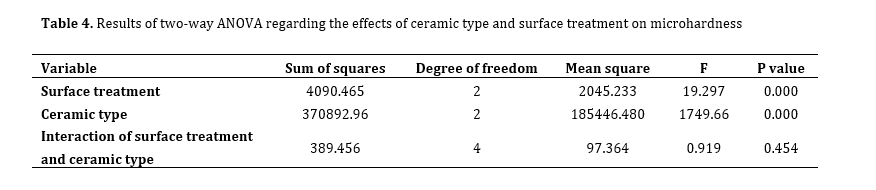
Two-way ANOVA (Table 4) showed significant effects of surface treatment (P<0.001) and ceramic type (P<0.001) on microhardness. However, the interaction effect of surface treatment and ceramic type on microhardness was not significant (P=0.454).
Two-way ANOVA (Table 4) showed significant effects of surface treatment (P<0.001) and ceramic type (P<0.001) on microhardness. However, the interaction effect of surface treatment and ceramic type on microhardness was not significant (P=0.454).
Table 3. Descriptive statistics of microhardness based on surface treatment and ceramic type (n=8)
Table 4. Results of two-way ANOVA regarding the effects of ceramic type and surface treatment on microhardness
Thus, the three surface treatments were compared regarding microhardness pairwise, irrespective of ceramic type, using the Tukey’s test. The results showed that the microhardness of the control group was significantly higher than that of the polishing (P<0.001) and glazing (P<0.001) groups. The microhardness of the glazing group was also significantly higher than that of the polishing group (P<0.001). In other words, the control group showed the highest and the polishing group showed the lowest microhardness.
Pairwise comparison of ceramic types, irrespective of surface treatment, was then performed using Tukey’s test. The results showed that Incoris ZI had a significantly higher microhardness than both IPS e.max (P<0.000) and Vita Suprinity (P<0.001). Vita Suprinity also had a significantly higher microhardness than IPS e.max CAD (P<0.001). In other words, Incoris ZI had the highest and IPS e.max CAD had the lowest microhardness.
Discussion
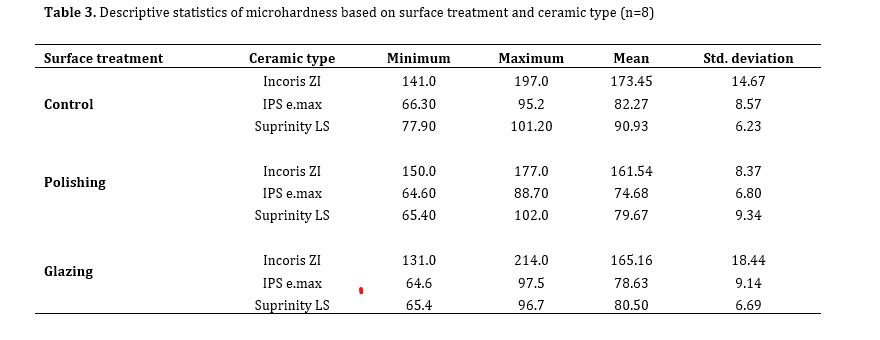
Table 4. Results of two-way ANOVA regarding the effects of ceramic type and surface treatment on microhardness
Thus, the three surface treatments were compared regarding microhardness pairwise, irrespective of ceramic type, using the Tukey’s test. The results showed that the microhardness of the control group was significantly higher than that of the polishing (P<0.001) and glazing (P<0.001) groups. The microhardness of the glazing group was also significantly higher than that of the polishing group (P<0.001). In other words, the control group showed the highest and the polishing group showed the lowest microhardness.
Pairwise comparison of ceramic types, irrespective of surface treatment, was then performed using Tukey’s test. The results showed that Incoris ZI had a significantly higher microhardness than both IPS e.max (P<0.000) and Vita Suprinity (P<0.001). Vita Suprinity also had a significantly higher microhardness than IPS e.max CAD (P<0.001). In other words, Incoris ZI had the highest and IPS e.max CAD had the lowest microhardness.
Discussion
The present results showed significant effects of ceramic type on microhardness such that Incoris ZI showed the highest and IPS e.max CAD showed the lowest microhardness. The effect of surface treatment on microhardness was also significant such that the control group had the highest and the polishing group had the lowest microhardness. Thus, the null hypothesis of the study was rejected. Higher microhardness in the control group suggests that maintaining the original surface integrity of these materials may be crucial for their mechanical performance. In contrast, both polishing and glazing treatments resulted in lower microhardness values, which raises important questions about the trade-offs involved in esthetic enhancements versus mechanical strength. The reduction in microhardness following these treatments suggests that while they can improve the surface finish and visual appeal of dental ceramics, they may compromise the materials' resistance to wear and fracture. This finding is particularly relevant in clinical settings where the longevity and durability of dental restorations are critical for patient outcomes. It is essential to consider how surface treatments might influence the performance of these materials in the oral environment, where they are subjected to various stresses. Furthermore, our statistical analysis highlighted significant differences in microhardness among the various materials, underscoring the importance of material selection in clinical applications. For instance, Incoris ZI demonstrated higher microhardness compared to IPS e.max CAD and Suprinity LS, suggesting that it may be a more robust choice for applications requiring high mechanical strength. These findings align with previous studies, reinforcing the notion that material properties play a vital role in the success of dental restorations [10, 12].
In our study, both polishing and glazing treatments resulted in lower microhardness values compared to the control group. This contrasts with the findings of Manso et al. [17], who suggested that while polishing with diamond rubbers effectively reduced roughness in fully crystallized ceramics, glazing was more effective for pre-crystallized ceramics to restore surface quality. Our results indicated that the microhardness reduction after polishing and glazing treatments may have implications for the wear resistance of ceramics, suggesting that esthetic enhancements could compromise mechanical integrity. Interestingly, while Manso et al. [17] reported that the glaze firing protocol reduced roughness more than polishing alone for LDS and ZLS materials, our analysis found that glazing caused a significantly higher microhardness than polishing. This discrepancy may arise from the specific characteristics of the materials tested. For instance, the superior performance of polishing with diamond paste, as suggested by Manjuran and Sreelal [25], highlights the importance of treatment methods on the surface characteristics and mechanical properties of ceramics. Our findings support the notion that employing advanced polishing techniques may enhance surface finish without significantly compromising microhardness. Moreover, the lack of difference in roughness between glaze firing protocols for LDS and ZLS ceramics, as noted by Zaniboni et al. [22], further emphasizes the need for a nuanced understanding of how different treatment protocols affect ceramic properties. Our results suggest that while both polishing and glazing can reduce microhardness, their effects on surface roughness and overall performance vary depending on the specific ceramic material and treatment applied.
The microhardness of ceramic materials is determined through indentation testing, which measures the resistance of a sample's surface to deformation [23, 24]. This property is critical for assessing the wear potential of restorative materials in comparison to natural dentition [25]. A higher microhardness indicates a greater likelihood of abrasiveness, potentially leading to increased wear on opposing teeth [26, 27].
In vitro design was the main limitation of this study. Due to the difference between the oral environment and the laboratory environment, similar clinical studies are required to determine the best surface treatment for ceramics. Also, only three ceramic types were evaluated in this study. More types of ceramics should be evaluated in future studies to achieve more accurate results.
Conclusion
In our study, both polishing and glazing treatments resulted in lower microhardness values compared to the control group. This contrasts with the findings of Manso et al. [17], who suggested that while polishing with diamond rubbers effectively reduced roughness in fully crystallized ceramics, glazing was more effective for pre-crystallized ceramics to restore surface quality. Our results indicated that the microhardness reduction after polishing and glazing treatments may have implications for the wear resistance of ceramics, suggesting that esthetic enhancements could compromise mechanical integrity. Interestingly, while Manso et al. [17] reported that the glaze firing protocol reduced roughness more than polishing alone for LDS and ZLS materials, our analysis found that glazing caused a significantly higher microhardness than polishing. This discrepancy may arise from the specific characteristics of the materials tested. For instance, the superior performance of polishing with diamond paste, as suggested by Manjuran and Sreelal [25], highlights the importance of treatment methods on the surface characteristics and mechanical properties of ceramics. Our findings support the notion that employing advanced polishing techniques may enhance surface finish without significantly compromising microhardness. Moreover, the lack of difference in roughness between glaze firing protocols for LDS and ZLS ceramics, as noted by Zaniboni et al. [22], further emphasizes the need for a nuanced understanding of how different treatment protocols affect ceramic properties. Our results suggest that while both polishing and glazing can reduce microhardness, their effects on surface roughness and overall performance vary depending on the specific ceramic material and treatment applied.
The microhardness of ceramic materials is determined through indentation testing, which measures the resistance of a sample's surface to deformation [23, 24]. This property is critical for assessing the wear potential of restorative materials in comparison to natural dentition [25]. A higher microhardness indicates a greater likelihood of abrasiveness, potentially leading to increased wear on opposing teeth [26, 27].
In vitro design was the main limitation of this study. Due to the difference between the oral environment and the laboratory environment, similar clinical studies are required to determine the best surface treatment for ceramics. Also, only three ceramic types were evaluated in this study. More types of ceramics should be evaluated in future studies to achieve more accurate results.
Conclusion
Within the study limitations, the findings showed that the microhardness values differed significantly across groups, and the control group had a higher microhardness than the polishing and glazing groups. The values tended to be higher for Incoris ZI ceramic, indicating that this ceramic may demonstrate greater wear resistance in clinical situations.
Type of Study: Original article |
Subject:
Restorative Dentistry
References
1. de Matos JD, Lopes GR, Queiroz DA, Nakano LJ, Ribeiro NC, Barbosa AB, et al. Dental ceramics: fabrication methods and aesthetic characterization. Coatings. 2022 Aug;12(8):1228. [DOI:10.3390/coatings12081228]
2. de Matos JD, Nakano LJ, Bottino MA, de Jesus RH, Maciel LC. Current considerations for dental ceramics and their respective :union: systems. Rev Bras Odontol. 2020;77(1):e1768. [DOI:10.18363/rbo.v77.2020.e1768]
3. Liu C, Eser A, Albrecht T, Stournari V, Felder M, Heintze S, et al. Strength characterization and lifetime prediction of dental ceramic materials. Dent Mater. 2021 Jan;37(1):94-105. [DOI:10.1016/j.dental.2020.10.015] [PMID]
4. Suhag D. Dental Biomaterials. In: Handbook of Biomaterials for Medical Applications, Volume 2: Applications. Berlin/Heidelberg: Springer International Publishing; 2024 Aug 19. p. 235-279. [DOI:10.1007/978-981-97-5906-4_8]
5. Albakry M. Insightful understanding of the role of the mechanical properties in defining the reliability of all-ceramic dental restorations: A review. J Biomater Nanobiotechnol. 2021 Aug;12(4):57-8. [DOI:10.4236/jbnb.2021.124006]
6. Tribst JPM, Valandro LF, Dal Piva AMO. Brittle dental ceramics: A challenge in dentistry. Dent Med Probl. 2024 May-Jun;61(3):319-21. [DOI:10.17219/dmp/174707] [PMID]
7. Al-Johani H, Haider J, Satterthwaite J, Borba M, Silikas N. A Comprehensive Review of the Multifaceted Characterisation Approaches of Dental Ceramics. Prosthesis. 2024 Sep;6(5):1055-90. [DOI:10.3390/prosthesis6050077]
8. Rezaie HR, Rizi HB, Khamseh MM, Öchsner A. A review on dental materials. Berlin/Heidelberg: Springer International Publishing; 2020 Jun. p. 47-171.
9. Zheng Y, Bashandeh K, Shakil A, Jha S, Polycarpou AA. Review of dental tribology: Current status and challenges. Tribol Int. 2022 Feb;166:107354. [DOI:10.1016/j.triboint.2021.107354]
10. Skorulska A, Piszko P, Rybak Z, Szymonowicz M, Dobrzyński M. Review on Polymer, Ceramic and Composite Materials for CAD/CAM Indirect Restorations in Dentistry-Application, Mechanical Characteristics and Comparison. Materials (Basel). 2021 Mar 24;14(7):1592. [DOI:10.3390/ma14071592] [PMID] [PMCID]
11. da Rosa LS, Dapieve KS, Dalla-Nora F, Rippe MP, Valandro LF, Sarkis-Onofre R, Pereira GKR. Does Adhesive Luting Reinforce the Mechanical Properties of Dental Ceramics Used as Restorative Materials? A Systematic Review and Meta-Analysis. J Adhes Dent. 2022 Apr;24:209-22.
12. Mavriqi L, Valente F, Murmura G, Sinjari B, Macrì M, Trubiani O, et al. Lithium disilicate and zirconia reinforced lithium silicate glass-ceramics for CAD/CAM dental restorations: biocompatibility, mechanical and microstructural properties after crystallization. J Dent. 2022 Apr;119:104054. [DOI:10.1016/j.jdent.2022.104054] [PMID]
13. Simba BG, Ribeiro MV, Alves MF, Amarante JE, Strecker K, dos Santos C. Effect of the temperature on the mechanical properties and translucency of lithium silicate dental glass-ceramic. Ceram Int. 2021 Apr;47(7):9933-40. [DOI:10.1016/j.ceramint.2020.12.137]
14. Zarone F, Ruggiero G, Leone R, Breschi L, Leuci S, Sorrentino R. Zirconia-reinforced lithium silicate (ZLS) mechanical and biological properties: A literature review. J Dent. 2021 Jun;109:103661. [DOI:10.1016/j.jdent.2021.103661] [PMID]
15. khulaif AlRashdi A, Al Mutairi FM, Hamad A, Aldubaikhi LY, Alharbi AD, Mossa HM. Dental CAD/CAM: a brief review. Int J Med Dev Ctries. 2020 Nov 5;4(11):1975-82. [DOI:10.24911/IJMDC.51-1598178821]
16. Bida C, Virvescu DI, Bosinceanu DN, Luchian I, Fratila D, Tunaru O, et al. Advances in dental prosthetics: the role of cad/cam technology in denture fabrication. Rom J Med Dent Educ. 2024 Jan;13(1).
17. Manso RWC, Silva AM, Zaniboni JF, Gelio MB, Campos EA de. Effects of polishing or glazing on surface roughness and microhardness after milling CAD-CAM ceramic materials. Cuad Educ Desarro. 2024 May;16(5):e4212. [DOI:10.55905/cuadv16n5-056]
18. Vohra M, Pandurangan KK, Shenoy A, Keskar V. A Comprehensive Review of the Surface and Chromatic Properties of Monolithic Zirconia: Evaluating the Impact of Polishing and Finishing Methods on Aesthetics and Performance. Cureus. 2024 Aug;16(8):e66029. [DOI:10.7759/cureus.66029]
19. Siddanna GD, Valcanaia AJ, Fierro PH, Neiva GF, Fasbinder DJ. Surface Evaluation of Resilient CAD/CAM ceramics after Contouring and Polishing. J Esthet Restor Dent. 2021 Jul;33(5):750-63. [DOI:10.1111/jerd.12735] [PMID]
20. Toma FR, Porojan SD, Vasiliu RD, Porojan L. The Effect of Polishing, Glazing, and Aging on Optical Characteristics of Multi-Layered Dental Zirconia with Different Degrees of Translucency. J Funct Biomater. 2023 Jan;14(2):68. [DOI:10.3390/jfb14020068] [PMID] [PMCID]
21. Dal Piva AMO, van Leeuwen NS, da Rosa LS, Kleverlaan CJ, Tribst JPM. Effect of Glazing Protocol on the Surface Roughness and Optical Properties of Lithia-Based Glass-Ceramics. Coatings. 2024 Jun;14(6):668. [DOI:10.3390/coatings14060668]
22. Zaniboni JF, Silva AM, Alencar CM, Porto TS, Jasinevicius RG, Fortulan CA, et al. Influence of different glaze firing protocols on the mechanical properties of CAD-CAM ceramic materials. J Prosthet Dent. 2022 Jun;127(6):925.e1-925.e8. [DOI:10.1016/j.prosdent.2022.03.009] [PMID]
23. Schlichting LH, Resende TH, Reis KR, Magne P. Simplified treatment of severe dental erosion with ultrathin CAD-CAM composite occlusal veneers and anterior bilaminar veneers. J Prosthet Dent. 2016 Oct;116(4):474-82. [DOI:10.1016/j.prosdent.2016.02.013] [PMID]
24. Rodrigues CRT, Turssi CP, Amaral FLB, Basting RT, França FMG. Changes to Glazed Dental Ceramic Shade, Roughness, and Microhardness after Bleaching and Simulated Brushing. J Prosthodont. 2019 Jan;28(1):e59-e67. [DOI:10.1111/jopr.12663]
25. Manjuran NG, Sreelal T. An in vitro study to identify a ceramic polishing protocol effecting smoothness superior to glazed surface. J Indian Prosthodont Soc. 2014 Sep;14(3):219-27. [DOI:10.1007/s13191-013-0313-3] [PMID] [PMCID]
26. Alves LMM, Rodrigues CS, Vardhaman S, Saunders C, Schneider JM, Lawn BR, et al. Exploring Ductility in Dental Ceramics. J Dent Res. 2022 Nov;101(12):1467-73. [DOI:10.1177/00220345221100409] [PMID] [PMCID]
27. Vasiliu RD, Porojan SD, Bîrdeanu MI, Uțu ID, Porojan L. The effect of thermocycling and surface treatments on the surface roughness and microhardness of three heat-pressed ceramics systems. Crystals. 2020 Mar;10(3):160. [DOI:10.3390/cryst10030160]
Send email to the article author
| Rights and permissions | |
 |
This work is licensed under a Creative Commons Attribution-NonCommercial 4.0 International License. |