
Journal of Research in Dental
and Maxillofacial Sciences

Volume 11, Issue 3 (9-2026)
J Res Dent Maxillofac Sci 2026, 11(3): 195-203 |
Back to browse issues page

Ethics code: Ref#GGSDC/Dean/Res/22/06


Download citation:
BibTeX | RIS | EndNote | Medlars | ProCite | Reference Manager | RefWorks
Send citation to:


BibTeX | RIS | EndNote | Medlars | ProCite | Reference Manager | RefWorks
Send citation to:
Veeraraghavan V P, P J N, Manyam R, A A J, Reddy Aileni K, R Patil S. Artificial Intelligence-Driven Models in Dental Trauma Management: Risk Prediction and Prognostic Evaluation of Treatment Outcomes. J Res Dent Maxillofac Sci 2026; 11 (3) :195-203
URL: http://jrdms.dentaliau.ac.ir/article-1-910-en.html
URL: http://jrdms.dentaliau.ac.ir/article-1-910-en.html
Vishnu Priya Veeraraghavan1 
 , Nagarathna P J2 , Ravikanth Manyam3 , Aysha Jebin A *4 , Kaladhar Reddy Aileni5 , Santosh R Patil
, Nagarathna P J2 , Ravikanth Manyam3 , Aysha Jebin A *4 , Kaladhar Reddy Aileni5 , Santosh R Patil
1- Centre of Molecular Medicine and Diagnostics, Saveetha Dental College and Hospitals, Saveetha University, India
2- Department of Pediatrics and Preventive Dentistry, Chhattisgarh Dental College and Research Institute, India
3- Department of Oral Pathology, Vishnu Dental College, Bhimavaram, India
4- Department of Periodontics, Krishnadevaraya College of Dental Sciences and Hospital, India ,ayshpathu3@gmail.com
5- Department of Preventive Dentistry, College of Dentistry, Jouf University, Kingdom of Saudi Arabia
2- Department of Pediatrics and Preventive Dentistry, Chhattisgarh Dental College and Research Institute, India
3- Department of Oral Pathology, Vishnu Dental College, Bhimavaram, India
4- Department of Periodontics, Krishnadevaraya College of Dental Sciences and Hospital, India ,
5- Department of Preventive Dentistry, College of Dentistry, Jouf University, Kingdom of Saudi Arabia
Full-Text [PDF 305 kb]
(5 Downloads)
| Abstract (HTML) (14 Views)
Full-Text: (1 Views)
Abstract
Background and Aim: Artificial intelligence (AI) offers a promising approach for stratifying risk and forecasting outcomes. This study evaluated the efficacy of an AI-based system in predicting dental trauma risk and assessing the long-term prognosis of traumatized teeth.
Materials and Methods: A prospective observational study was conducted on 138 participants aged 10–50 years. Data on malocclusion severity, sports participation, and age were integrated into an AI system. The model stratified participants into low, moderate, and high-risk categories for dental trauma, and predicted long-term outcomes for traumatized teeth based on treatment modalities. Model performance was validated using sensitivity, specificity, and area under the receiver operating characteristic curve (AUROC) metrics. Prognostic evaluations were compared across endodontic therapy, splinting, and extraction using Kaplan-Meier survival analysis.
Results: The AI model demonstrated high sensitivity (92%) and specificity (90%) in predicting trauma risk, with an AUROC of 0.92. Severe malocclusion significantly increased trauma risk [odds ratio (OR): 3.1; 95% confidence interval (CI): 1.8–5.3; P<0.01]. Sports participation was associated with a 2.7-fold increased risk (OR: 2.7; 95% CI: 1.5–4.8; P<0.01). Prognostic assessments revealed that endodontic therapy had the highest survival probability (12-month survival >85%), followed by splinting (~70%) and extraction (<60%). Kaplan-Meier survival analysis showed significantly better outcomes for endodontic therapy compared to splinting and extraction (P<0.01).
Conclusion: The AI system effectively predicted trauma risk and prognosis, demonstrating its potential as a clinical tool for dental trauma management. Integrating AI into routine practice can improve preventive strategies and guide treatment planning, enhancing patient outcomes.
Keywords: Artificial Intelligence; Malocclusion; Prognosis; Risk assessment; Tooth Avulsion
Introduction
Materials and Methods: A prospective observational study was conducted on 138 participants aged 10–50 years. Data on malocclusion severity, sports participation, and age were integrated into an AI system. The model stratified participants into low, moderate, and high-risk categories for dental trauma, and predicted long-term outcomes for traumatized teeth based on treatment modalities. Model performance was validated using sensitivity, specificity, and area under the receiver operating characteristic curve (AUROC) metrics. Prognostic evaluations were compared across endodontic therapy, splinting, and extraction using Kaplan-Meier survival analysis.
Results: The AI model demonstrated high sensitivity (92%) and specificity (90%) in predicting trauma risk, with an AUROC of 0.92. Severe malocclusion significantly increased trauma risk [odds ratio (OR): 3.1; 95% confidence interval (CI): 1.8–5.3; P<0.01]. Sports participation was associated with a 2.7-fold increased risk (OR: 2.7; 95% CI: 1.5–4.8; P<0.01). Prognostic assessments revealed that endodontic therapy had the highest survival probability (12-month survival >85%), followed by splinting (~70%) and extraction (<60%). Kaplan-Meier survival analysis showed significantly better outcomes for endodontic therapy compared to splinting and extraction (P<0.01).
Conclusion: The AI system effectively predicted trauma risk and prognosis, demonstrating its potential as a clinical tool for dental trauma management. Integrating AI into routine practice can improve preventive strategies and guide treatment planning, enhancing patient outcomes.
Keywords: Artificial Intelligence; Malocclusion; Prognosis; Risk assessment; Tooth Avulsion
Introduction
Dental trauma is a significant public health concern, particularly among individuals involved in sports and other high-risk activities [1]. The prevalence of dental injuries is estimated to range from 11% to 30% globally, with anterior teeth being the most commonly affected [2]. Factors such as age, malocclusion, and participation in contact sports significantly increase the risk of dental trauma, leading to functional and esthetic complications that can profoundly affect the quality of life [3]. Early prediction of dental trauma and its prognosis is essential to minimize long-term morbidity and optimize treatment outcomes [4]. The role of artificial intelligence (AI) in healthcare has grown exponentially in recent years, offering significant potential in predictive diagnostics and treatment planning [5]. AI-based systems, particularly those employing machine learning algorithms, can analyze complex datasets, identify patterns, and predict outcomes with high accuracy [6]. In dentistry, AI has been successfully applied to diagnose caries, predict orthodontic outcomes, and assess the prognosis of various dental treatments [7]. However, its application in trauma risk prediction and prognosis remains underexplored. Malocclusion has been identified as a significant risk factor for dental trauma, with studies showing that an increased overjet and inadequate lip coverage significantly elevate the likelihood of traumatic dental injuries [8]. Additionally, age plays a critical role, with children and adolescents being particularly vulnerable due to incomplete neuromuscular coordination and participation in recreational activities [9]. Moreover, participation in contact sports increases exposure to dental trauma, emphasizing the need for preventive strategies tailored to at-risk populations [10]. Despite advancements in dental trauma management, the long-term prognosis of traumatized teeth remains variable, influenced by factors such as treatment type, timing, and patient-specific characteristics [11]. Early and accurate prediction of trauma risk and prognosis can aid clinicians in developing personalized preventive and therapeutic strategies. AI has the potential to revolutionize this process by integrating demographic, clinical, and behavioral data to generate precise risk assessments and prognostic evaluations [12]. This study aimed to evaluate the efficacy of an AI-based system in predicting dental trauma risk and assessing the long-term prognosis of traumatized teeth. By integrating data on sports participation, malocclusion severity, and age, the AI model sought to stratify individuals based on their trauma risk and provide prognostic insights to guide treatment planning. The findings of this study could pave the way for the integration of AI into routine dental practice, offering a novel approach to managing dental trauma and improving patient outcomes.
Materials and Methods
Materials and Methods
Study design:
This study employed a prospective observational design to investigate the application of AI in predicting dental trauma risk and evaluating the long-term prognosis of traumatized teeth. The study was conducted on a cohort of 138 participants, selected based on specific inclusion and exclusion criteria. The AI system utilized predictive algorithms to assess the likelihood of trauma based on clinical and demographic factors and provided prognostic evaluations to support treatment planning. The study spanned 12 months, including baseline assessments and follow-up evaluations.
Sample size determination:
The required sample size was calculated based on the expected prevalence of dental trauma and the anticipated effect size for AI-based predictive modelling. Using a power analysis with a significance level (α) of 0.05, a power (1-β) of 0.80, and an assumed effect size (Cohen’s d) of 0.50, the minimum required sample size was determined to be 126 participants. This was computed using G*Power software version 3.1 (Universität Düsseldorf, Germany) for logistic regression analysis, accounting for the inclusion of multiple predictor variables such as malocclusion severity, sports participation, and age. To compensate for potential dropout or incomplete data, an additional 10% was added, leading to a final target sample size of 138 participants.
Study population:
The study included participants aged 10 to 50 years who were actively engaged in sports or activities associated with a high risk of dental trauma. Eligibility also required the presence of varying severities of malocclusion, such as increased overjet, inadequate lip coverage, or dental crowding and spacing. Participants were required to provide informed consent, with parental or guardian consent necessary for minors. Additionally, they had to be available for follow-up evaluations over the 12-month study period. Individuals were excluded if they had systemic diseases affecting oral health, such as diabetes or osteoporosis, or a history of significant craniofacial trauma or reconstructive dental procedures. Patients with severe psychological conditions or cognitive impairments that could interfere with their ability to participate were also excluded. Furthermore, the use of medications or treatments known to alter bone density or dental structures, as well as refusal to provide informed consent or non-compliance with study requirements, led to exclusion from the study. The study was approved by the Institutional Review Board of Guru Gobind Singh College of Dental Sciences and Research Centre [Ref#GGSDC/Dean/Res/22/06], and informed consent was obtained from all participants or their guardians. To protect privacy, all participant data were anonymized before analysis. Ethical adherence ensured that the study met regulatory and research integrity standards.
Data collection:
The data collection process involved two main components: demographic and clinical data acquisition, and AI model input preparation. Demographic data included age, gender, and sports participation intensity, while clinical data involved a detailed dental examination.
Malocclusion severity was assessed using overjet measurements, Angle’s classification, and evaluations of crowding or spacing. The AI model was trained on historical data from a similar cohort, using these factors to predict trauma risk and prognosis. Each participant’s data were entered into the AI system, which generated predictive and prognostic outputs.
AI model design and integration:
The AI system utilized a supervised learning approach, incorporating features such as sports activity levels, malocclusion severity, and age group segmentation. A convolutional neural network (CNN) was employed to process radiographic images when available. The system predicted the probability of dental trauma within a five-year window and provided a long-term prognosis based on treatment modalities, such as endodontic therapy or splinting. The predictive outputs were stratified into categories such as low, moderate, or high risk for trauma, and prognosis was classified as excellent, moderate, or poor. To ensure transparency and reproducibility, the AI model's design and training methodology are detailed below.
The AI system utilized a supervised learning approach, integrating demographic and clinical factors to predict dental trauma risk and prognosis. The model was developed using a combination of logistic regression for categorical data and a CNN for processing radiographic images, where available. CNNs were chosen for their proven efficacy in analyzing complex image patterns, particularly in healthcare applications such as radiographic diagnostics, which require high sensitivity and specificity in image interpretation. Logistic regression complemented this by effectively handling non-image-based predictors such as age, sports participation, and malocclusion severity. To minimize bias and ensure robust performance, the dataset was carefully balanced during training and testing phases. Equal representation across trauma risk categories (low, moderate, and high) and treatment outcome groups (excellent, moderate, and poor prognosis) was ensured. The dataset comprised historical records from a similar cohort, including a diverse population with varying levels of malocclusion severity and sports activity. Data augmentation techniques, such as rotation and scaling of radiographic images, were employed to enhance model generalizability and address potential class imbalances in image data. The AI model underwent rigorous cross-validation to assess performance, with metrics including sensitivity, specificity, positive predictive value (PPV), negative predictive value (NPV), and area under the receiver operating characteristic curve (AUROC). The final model demonstrated robust predictive accuracy, with high reliability in both risk stratification and prognostic evaluations.
Dataset balancing and overfitting mitigation:
To ensure the AI model's reliability and generalizability, the dataset was carefully balanced to prevent bias in predictions. The dataset comprised historical records from a similar cohort, ensuring equitable representation across all trauma risk categories (low, moderate, and high) and treatment outcome groups (excellent, moderate, and poor prognosis). Stratified sampling was employed to maintain proportional representation of key variables, such as malocclusion severity, age, and sports participation levels, within the training and testing datasets. This approach reduced the risk of over-representation of any specific category, which could bias the AI model's predictions.
To mitigate overfitting, several strategies were implemented during the model development phase. The dataset was divided into training (70%), validation (20%), and testing (10%) subsets to ensure robust evaluation. Regularization techniques, such as dropout layers in the CNN, were applied to reduce model complexity and prevent overfitting. Additionally, data augmentation methods, including rotation, scaling, and flipping of radiographic images, were utilized to artificially increase the diversity of the training data, enhancing the model's ability to generalize to unseen cases. Early stopping was employed during training to halt the learning process once performance on the validation dataset plateaued, preventing over-optimization on the training data. Hyperparameter tuning, conducted using a grid search approach, further optimized the model's architecture and performance metrics. The study’s primary outcome was the AI-predicted probability of dental trauma occurrence. Secondary outcomes included prognostic assessments, which evaluated recovery timelines and success rates of different treatment approaches. Outcomes were measured over a 12-month follow-up period, with trauma risk and prognosis accuracy cross-verified by clinicians to assess AI performance.
Data validation:
The AI system’s predictions were validated against clinician assessments using key metrics such as sensitivity, specificity, PPV, and NPV. These metrics ensured that the AI model’s outputs were accurate and clinically relevant. To further validate the model, the performance was measured using the AUROC.
Statistical analysis:
Descriptive statistics were used to summarize demographic and clinical characteristics of the study participants. Logistic regression analysis was performed to identify significant predictors of dental trauma risk. Survival probabilities for different treatment modalities (endodontic therapy, splinting, and extraction) were analyzed using the Kaplan-Meier survival curves, and differences in survival distributions were compared using the Mantel-Cox (log-rank) test. The log-rank test assessed statistical differences in survival probabilities, specifically evaluating whether extraction had significantly lower survival compared to endodontic therapy and splinting. Model performance metrics, including sensitivity, specificity, PPV, NPV, and AUROC were calculated to assess the AI system’s predictive accuracy. A P value of <0.05 was considered statistically significant. For handling missing data, a multiple imputation method was employed to preserve the integrity of the dataset. Missing values were imputed based on observed relationships among demographic and clinical variables using predictive mean matching. This approach ensured that the imputed data closely reflected the distribution of the observed data, minimizing bias. Sensitivity analyses were conducted to compare results with and without imputed data, confirming the robustness of the findings. The final analysis used the imputed dataset to ensure a complete and comprehensive evaluation of the AI model’s performance.
Participants underwent a baseline assessment, including demographic and clinical evaluations, followed by trauma risk prediction using the AI system. The AI predictions were reviewed in conjunction with clinician assessments at different stages of patient management. Initial examinations were conducted by general dentists and orthodontists, who assessed malocclusion severity, occlusal discrepancies, and prior dental trauma history. For treatment planning, endodontists and oral surgeons collaborated to determine the optimal intervention based on AI-generated risk stratification and clinical findings. Risk stratification results were shared with participants to guide preventive strategies and individualized treatment recommendations. During follow-up assessments, prosthodontists and periodontists were involved in evaluating treatment outcomes, monitoring post-intervention prognosis, and ensuring adherence to protective measures such as mouthguards for athletes. The accuracy of AI predictions was cross-verified through these multidisciplinary clinician evaluations over the study period.
Results
This study employed a prospective observational design to investigate the application of AI in predicting dental trauma risk and evaluating the long-term prognosis of traumatized teeth. The study was conducted on a cohort of 138 participants, selected based on specific inclusion and exclusion criteria. The AI system utilized predictive algorithms to assess the likelihood of trauma based on clinical and demographic factors and provided prognostic evaluations to support treatment planning. The study spanned 12 months, including baseline assessments and follow-up evaluations.
Sample size determination:
The required sample size was calculated based on the expected prevalence of dental trauma and the anticipated effect size for AI-based predictive modelling. Using a power analysis with a significance level (α) of 0.05, a power (1-β) of 0.80, and an assumed effect size (Cohen’s d) of 0.50, the minimum required sample size was determined to be 126 participants. This was computed using G*Power software version 3.1 (Universität Düsseldorf, Germany) for logistic regression analysis, accounting for the inclusion of multiple predictor variables such as malocclusion severity, sports participation, and age. To compensate for potential dropout or incomplete data, an additional 10% was added, leading to a final target sample size of 138 participants.
Study population:
The study included participants aged 10 to 50 years who were actively engaged in sports or activities associated with a high risk of dental trauma. Eligibility also required the presence of varying severities of malocclusion, such as increased overjet, inadequate lip coverage, or dental crowding and spacing. Participants were required to provide informed consent, with parental or guardian consent necessary for minors. Additionally, they had to be available for follow-up evaluations over the 12-month study period. Individuals were excluded if they had systemic diseases affecting oral health, such as diabetes or osteoporosis, or a history of significant craniofacial trauma or reconstructive dental procedures. Patients with severe psychological conditions or cognitive impairments that could interfere with their ability to participate were also excluded. Furthermore, the use of medications or treatments known to alter bone density or dental structures, as well as refusal to provide informed consent or non-compliance with study requirements, led to exclusion from the study. The study was approved by the Institutional Review Board of Guru Gobind Singh College of Dental Sciences and Research Centre [Ref#GGSDC/Dean/Res/22/06], and informed consent was obtained from all participants or their guardians. To protect privacy, all participant data were anonymized before analysis. Ethical adherence ensured that the study met regulatory and research integrity standards.
Data collection:
The data collection process involved two main components: demographic and clinical data acquisition, and AI model input preparation. Demographic data included age, gender, and sports participation intensity, while clinical data involved a detailed dental examination.
Malocclusion severity was assessed using overjet measurements, Angle’s classification, and evaluations of crowding or spacing. The AI model was trained on historical data from a similar cohort, using these factors to predict trauma risk and prognosis. Each participant’s data were entered into the AI system, which generated predictive and prognostic outputs.
AI model design and integration:
The AI system utilized a supervised learning approach, incorporating features such as sports activity levels, malocclusion severity, and age group segmentation. A convolutional neural network (CNN) was employed to process radiographic images when available. The system predicted the probability of dental trauma within a five-year window and provided a long-term prognosis based on treatment modalities, such as endodontic therapy or splinting. The predictive outputs were stratified into categories such as low, moderate, or high risk for trauma, and prognosis was classified as excellent, moderate, or poor. To ensure transparency and reproducibility, the AI model's design and training methodology are detailed below.
The AI system utilized a supervised learning approach, integrating demographic and clinical factors to predict dental trauma risk and prognosis. The model was developed using a combination of logistic regression for categorical data and a CNN for processing radiographic images, where available. CNNs were chosen for their proven efficacy in analyzing complex image patterns, particularly in healthcare applications such as radiographic diagnostics, which require high sensitivity and specificity in image interpretation. Logistic regression complemented this by effectively handling non-image-based predictors such as age, sports participation, and malocclusion severity. To minimize bias and ensure robust performance, the dataset was carefully balanced during training and testing phases. Equal representation across trauma risk categories (low, moderate, and high) and treatment outcome groups (excellent, moderate, and poor prognosis) was ensured. The dataset comprised historical records from a similar cohort, including a diverse population with varying levels of malocclusion severity and sports activity. Data augmentation techniques, such as rotation and scaling of radiographic images, were employed to enhance model generalizability and address potential class imbalances in image data. The AI model underwent rigorous cross-validation to assess performance, with metrics including sensitivity, specificity, positive predictive value (PPV), negative predictive value (NPV), and area under the receiver operating characteristic curve (AUROC). The final model demonstrated robust predictive accuracy, with high reliability in both risk stratification and prognostic evaluations.
Dataset balancing and overfitting mitigation:
To ensure the AI model's reliability and generalizability, the dataset was carefully balanced to prevent bias in predictions. The dataset comprised historical records from a similar cohort, ensuring equitable representation across all trauma risk categories (low, moderate, and high) and treatment outcome groups (excellent, moderate, and poor prognosis). Stratified sampling was employed to maintain proportional representation of key variables, such as malocclusion severity, age, and sports participation levels, within the training and testing datasets. This approach reduced the risk of over-representation of any specific category, which could bias the AI model's predictions.
To mitigate overfitting, several strategies were implemented during the model development phase. The dataset was divided into training (70%), validation (20%), and testing (10%) subsets to ensure robust evaluation. Regularization techniques, such as dropout layers in the CNN, were applied to reduce model complexity and prevent overfitting. Additionally, data augmentation methods, including rotation, scaling, and flipping of radiographic images, were utilized to artificially increase the diversity of the training data, enhancing the model's ability to generalize to unseen cases. Early stopping was employed during training to halt the learning process once performance on the validation dataset plateaued, preventing over-optimization on the training data. Hyperparameter tuning, conducted using a grid search approach, further optimized the model's architecture and performance metrics. The study’s primary outcome was the AI-predicted probability of dental trauma occurrence. Secondary outcomes included prognostic assessments, which evaluated recovery timelines and success rates of different treatment approaches. Outcomes were measured over a 12-month follow-up period, with trauma risk and prognosis accuracy cross-verified by clinicians to assess AI performance.
Data validation:
The AI system’s predictions were validated against clinician assessments using key metrics such as sensitivity, specificity, PPV, and NPV. These metrics ensured that the AI model’s outputs were accurate and clinically relevant. To further validate the model, the performance was measured using the AUROC.
Statistical analysis:
Descriptive statistics were used to summarize demographic and clinical characteristics of the study participants. Logistic regression analysis was performed to identify significant predictors of dental trauma risk. Survival probabilities for different treatment modalities (endodontic therapy, splinting, and extraction) were analyzed using the Kaplan-Meier survival curves, and differences in survival distributions were compared using the Mantel-Cox (log-rank) test. The log-rank test assessed statistical differences in survival probabilities, specifically evaluating whether extraction had significantly lower survival compared to endodontic therapy and splinting. Model performance metrics, including sensitivity, specificity, PPV, NPV, and AUROC were calculated to assess the AI system’s predictive accuracy. A P value of <0.05 was considered statistically significant. For handling missing data, a multiple imputation method was employed to preserve the integrity of the dataset. Missing values were imputed based on observed relationships among demographic and clinical variables using predictive mean matching. This approach ensured that the imputed data closely reflected the distribution of the observed data, minimizing bias. Sensitivity analyses were conducted to compare results with and without imputed data, confirming the robustness of the findings. The final analysis used the imputed dataset to ensure a complete and comprehensive evaluation of the AI model’s performance.
Participants underwent a baseline assessment, including demographic and clinical evaluations, followed by trauma risk prediction using the AI system. The AI predictions were reviewed in conjunction with clinician assessments at different stages of patient management. Initial examinations were conducted by general dentists and orthodontists, who assessed malocclusion severity, occlusal discrepancies, and prior dental trauma history. For treatment planning, endodontists and oral surgeons collaborated to determine the optimal intervention based on AI-generated risk stratification and clinical findings. Risk stratification results were shared with participants to guide preventive strategies and individualized treatment recommendations. During follow-up assessments, prosthodontists and periodontists were involved in evaluating treatment outcomes, monitoring post-intervention prognosis, and ensuring adherence to protective measures such as mouthguards for athletes. The accuracy of AI predictions was cross-verified through these multidisciplinary clinician evaluations over the study period.
Results
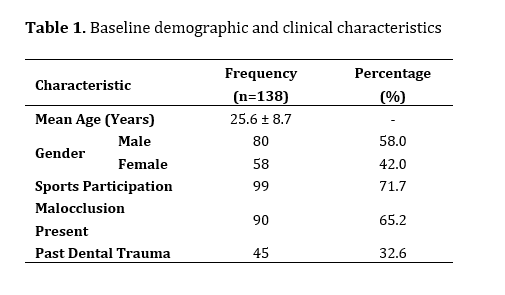
Table 1 provides an overview of the study population. The mean age of the participants was 25.6 years, with a standard deviation of 8.7 years, indicating a diverse age group. The majority of the participants were males (58%), consistent with the higher likelihood of trauma risk in males due to increased participation in high-risk activities. Sports participation was prevalent in 72% of the participants, emphasizing its role as a critical factor in trauma risk. Additionally, 65% of the participants exhibited varying degrees of malocclusion, highlighting a significant clinical variable for AI-based trauma prediction.
Table 1. Baseline demographic and clinical characteristics
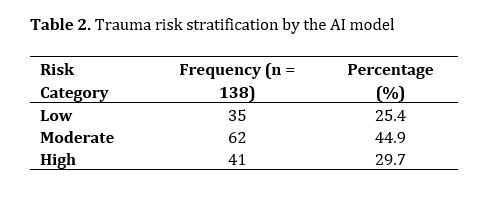
The AI model categorized the participants into low, moderate, and high-risk groups for dental trauma. Moderate risk was the most common category (44.9%), followed by high risk (29.7%) and low risk (25.4%). This distribution suggests that the AI model effectively stratified participants based on their demographic and clinical profiles, providing actionable insights for clinicians (Table 2). Participants in the high-risk group predominantly had severe malocclusion and engaged in high-impact sports, underscoring the importance of tailored preventive strategies.
Table 2. Trauma risk stratification by the AI model
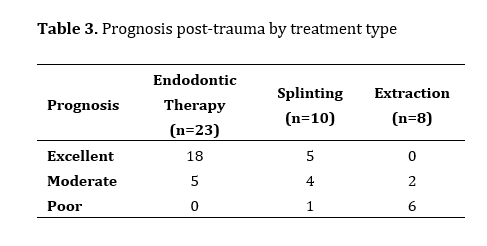
The prognosis varied significantly across treatment modalities. Endodontic therapy showed the highest rate of excellent outcomes (78.3%); while, splinting resulted in mixed outcomes. Extraction had the poorest prognosis, with 75% of the cases classified as poor (Table 3). These findings highlight the importance of early and appropriate treatment interventions in improving long-term outcomes.
Table 3. Prognosis post-trauma by treatment type
Logistic regression analysis identified significant predictors of dental trauma risk. Severe malocclusion was associated with a 3.1-fold increased risk [odds ratio (OR): 3.1; 95% confidence interval (CI): 1.8–5.3; P<0.01]; while, sports participation showed a 2.7-fold increased risk (OR: 2.7; 95% CI: 1.5–4.8; P<0.01). These results highlight the strong predictive influence of clinical and behavioral factors on trauma risk. The Kaplan-Meier survival analysis showed that the participants receiving early endodontic therapy had significantly better outcomes P< 0.01), as illustrated in Figure 1. Mantel-Cox (log-rank) analysis confirmed a statistically significant difference between extraction and other treatment modalities. Endodontic therapy vs. extraction (χ² = 10.23, P<0.01), and splinting vs. extraction (χ² = 6.78, P=0.009) indicated that extraction had a significantly lower survival probability than both treatment options.
Discussion
Table 1. Baseline demographic and clinical characteristics
The AI model categorized the participants into low, moderate, and high-risk groups for dental trauma. Moderate risk was the most common category (44.9%), followed by high risk (29.7%) and low risk (25.4%). This distribution suggests that the AI model effectively stratified participants based on their demographic and clinical profiles, providing actionable insights for clinicians (Table 2). Participants in the high-risk group predominantly had severe malocclusion and engaged in high-impact sports, underscoring the importance of tailored preventive strategies.
Table 2. Trauma risk stratification by the AI model
The prognosis varied significantly across treatment modalities. Endodontic therapy showed the highest rate of excellent outcomes (78.3%); while, splinting resulted in mixed outcomes. Extraction had the poorest prognosis, with 75% of the cases classified as poor (Table 3). These findings highlight the importance of early and appropriate treatment interventions in improving long-term outcomes.
Table 3. Prognosis post-trauma by treatment type
Logistic regression analysis identified significant predictors of dental trauma risk. Severe malocclusion was associated with a 3.1-fold increased risk [odds ratio (OR): 3.1; 95% confidence interval (CI): 1.8–5.3; P<0.01]; while, sports participation showed a 2.7-fold increased risk (OR: 2.7; 95% CI: 1.5–4.8; P<0.01). These results highlight the strong predictive influence of clinical and behavioral factors on trauma risk. The Kaplan-Meier survival analysis showed that the participants receiving early endodontic therapy had significantly better outcomes P< 0.01), as illustrated in Figure 1. Mantel-Cox (log-rank) analysis confirmed a statistically significant difference between extraction and other treatment modalities. Endodontic therapy vs. extraction (χ² = 10.23, P<0.01), and splinting vs. extraction (χ² = 6.78, P=0.009) indicated that extraction had a significantly lower survival probability than both treatment options.
Discussion
This study evaluated the efficacy of an AI system in predicting dental trauma risk and assessing the prognosis of traumatized teeth in a cohort of 138 participants. The results highlighted the potential of AI in clinical decision-making, with the model demonstrating high accuracy in trauma risk stratification and long-term prognostic evaluations. The findings underscore the value of integrating AI into routine dental practice to enhance preventive strategies and optimize treatment outcomes. The AI model accurately stratified participants into low, moderate, and high-risk categories for dental trauma. Moderate and high-risk groups were predominantly characterized by severe malocclusion and sports participation, both well-documented risk factors in dental trauma literature. Studies have shown that individuals with an increased overjet (>3 mm) and inadequate lip coverage are at a significantly higher risk of traumatic dental injuries [13-15]. Moreover, contact sports such as football, rugby, and hockey further amplify trauma risk due to direct physical contact and high-impact collisions [16]. The integration of these variables into the AI system allowed for precise identification of high-risk individuals, providing opportunities for targeted preventive measures such as the use of custom-fitted mouthguards and orthodontic interventions. Similar predictive systems have been applied in other domains of dentistry. For instance, AI models have been used to predict orthodontic treatment outcomes and identify caries risk with high sensitivity and specificity [17,18]. However, few studies have explored its utility in dental trauma prediction. The findings of this study align with those of a study by Farhadian et al. [19], which demonstrated the feasibility of machine learning algorithms to identify children at risk for sports-related dental injuries. The AI system also demonstrated robust performance in predicting the prognosis of traumatized teeth. Long-term outcomes were influenced by treatment modality, with endodontic therapy yielding the best results, followed by splinting, while extraction was associated with poor outcomes. These findings are consistent with the existing literature on trauma management, which emphasizes the importance of early and appropriate interventions to preserve tooth structure and functionality [20]. Studies have shown that timely endodontic therapy can significantly improve survival rates of traumatized teeth by effectively addressing pulpal and periapical pathologies [21,22]. Splinting, often used for luxation injuries and avulsions, yielded mixed outcomes in this study. While it provided moderate survival probabilities, the results depended on factors such as the severity of the injury and the timing of intervention. Prolonged splinting durations have been associated with increased risks of root resorption and ankylosis, which may explain the lower survival probabilities observed over time [23]. Conversely, teeth managed with extraction showed the poorest outcomes, underscoring the irreversible nature of this intervention and its implications for long-term oral health. In the context of dental trauma, Zhang et al. [4] emphasized the critical role of treatment timing and modality in determining long-term outcomes, findings that resonate with the results of this study. The Kaplan-Meier survival analysis in this study revealed that endodontic therapy consistently outperformed other modalities in preserving tooth survival over a 12-month period. This aligns with clinical guidelines advocating for early pulpal intervention to mitigate risks of infection and resorption [24]. The integration of AI into clinical practice could revolutionize the management of dental trauma. By providing accurate risk stratification, AI systems enable clinicians to implement preventive measures for high-risk individuals, reducing the incidence of trauma. For instance, athletes identified as high-risk could benefit from protective measures such as custom mouthguards, while orthodontic corrections could be prioritized for individuals with severe malocclusion. Early identification of at-risk populations could also reduce healthcare costs by minimizing the need for extensive restorative procedures. Prognostic predictions further enhance clinical decision-making by guiding treatment planning. The ability to predict long-term outcomes allows clinicians to choose interventions with the highest likelihood of success. For example, patients with luxation injuries could be counseled on the benefits of timely endodontic therapy; while, those with poor prognostic indicators could be offered alternative solutions such as implants or prostheses. The findings of this study support the potential of AI as an adjunct tool in evidence-based practice, ensuring that treatment decisions are informed by robust predictive data. One of the strengths of this study was its use of a diverse dataset encompassing demographic, clinical, and behavioral factors, which allowed the AI model to generate accurate predictions. The inclusion of malocclusion metrics, sports participation data, and age segmentation ensured that key predictors of trauma risk and prognosis were accounted for, enhancing the model's reliability. However, the study also had limitations. The follow-up period of 12 months may not fully capture the long-term prognosis of traumatized teeth, particularly for injuries with delayed complications such as root resorption or ankylosis. Additionally, the reliance on clinician input for model validation introduces potential biases, as clinical assessments may vary between practitioners. Future studies should consider longer follow-up periods and larger, multicenter datasets to validate the findings and improve generalizability. The findings of this study open avenues for further research into the application of AI in dental trauma management. Future studies could explore the integration of radiographic and three-dimensional imaging data into AI models to enhance their predictive accuracy. Additionally, the use of deep learning algorithms for real-time analysis in emergency settings could significantly improve the efficiency of trauma management. Another area of interest is the development of patient-centered AI applications, such as mobile apps that provide personalized risk assessments and preventive recommendations. These tools could empower patients to take proactive measures in reducing their trauma risk, bridging the gap between clinical and self-care.
Conclusion
Conclusion
This study highlighted the potential of AI in transforming the management of dental trauma. By accurately predicting trauma risk and prognosis, AI systems can support clinicians in implementing targeted preventive strategies and optimizing treatment plans. The findings underscore the need for continued research and development in this field to unlock the full potential of AI in improving patient outcomes.
Type of Study: Original article |
Subject:
pediatric
References
1. Andersson L. Epidemiology of traumatic dental injuries. J Endod. 2013 Mar;39(3 Suppl):S2-5. [DOI:10.1016/j.joen.2012.11.021] [PMID]
2. Petti S, Glendor U, Andersson L. World traumatic dental injury prevalence and incidence, a meta-analysis-One billion living people have had traumatic dental injuries. Dent Traumatol. 2018 Apr;34(2):71-86. [DOI:10.1111/edt.12389] [PMID]
3. El-Kalla IH, Shalan HM, Bakr RA. Impact of dental trauma on quality of life among 11-14 years schoolchildren. Contemp Clin Dent. 2017 Oct-Dec;8(4):538-44. [DOI:10.4103/ccd.ccd_428_17] [PMID] [PMCID]
4. Zhang JL, Peng ZL, Huang J, Pan YJ, Sun ZW, Mai ZH. A two-year retrospective study on traumatic dental injury in the primary dentition. Medicine (Baltimore). 2023 Nov;102(45):e35750. [DOI:10.1097/MD.0000000000035750] [PMID] [PMCID]
5. Bajwa J, Munir U, Nori A, Williams B. Artificial intelligence in healthcare: transforming the practice of medicine. Future Healthc J. 2021 Jul;8(2):e188-94. [DOI:10.7861/fhj.2021-0095] [PMID] [PMCID]
6. Dixon D, Sattar H, Moros N, Kesireddy SR, Ahsan H, Lakkimsetti M, et al. Unveiling the influence of AI predictive analytics on patient outcomes: A comprehensive narrative review. Cureus. 2024 May;16(5):e59954. [DOI:10.7759/cureus.59954]
7. Khanagar SB, Al-Ehaideb A, Maganur PC, Vishwanathaiah S, Patil S, Baeshen HA, et al. Developments, application, and performance of artificial intelligence in dentistry - A systematic review. J Dent Sci. 2021 Jan;16(1):508-22. [DOI:10.1016/j.jds.2020.06.019] [PMID] [PMCID]
8. Schatz JP, Ostini E, Hakeberg M, Kiliaridis S. Large overjet as a risk factor of traumatic dental injuries: a prospective longitudinal study. Prog Orthod. 2020 Nov;21(1):41. [DOI:10.1186/s40510-020-00341-5] [PMID] [PMCID]
9. Smits-Engelsman B, Verbecque E. Pediatric care for children with developmental coordination disorder, can we do better? Biomed J. 2022 Apr;45(2):250-64. [DOI:10.1016/j.bj.2021.08.008] [PMID] [PMCID]
10. Ramagoni NK, Singamaneni VK, Rao SR, Karthikeyan J. Sports dentistry: A review. J Int Soc Prev Community Dent. 2014 Dec;4(Suppl 3):S139-46. [DOI:10.4103/2231-0762.149019] [PMID] [PMCID]
11. Abbott PV. Indications for root canal treatment following traumatic dental injuries to permanent teeth. Aust Dent J. 2023 Jun;68 Suppl 1:S123-40. [DOI:10.1111/adj.12989] [PMID]
12. Alowais SA, Alghamdi SS, Alsuhebany N, Alqahtani T, Alshaya AI, Almohareb SN, et al. Revolutionizing healthcare: the role of artificial intelligence in clinical practice. BMC Med Educ. 2023 Sep;23(1):689. [DOI:10.1186/s12909-023-04698-z] [PMID]
13. Gupta S, Kumar-Jindal S, Bansal M, Singla A. Prevalence of traumatic dental injuries and role of incisal overjet and inadequate lip coverage as risk factors among 4-15 years old government school children in Baddi-Barotiwala Area, Himachal Pradesh, India. Med Oral Patol Oral Cir Bucal. 2011 Nov;16(7):e960-5. [DOI:10.4317/medoral.17265] [PMID]
14. Ain TS, Lingesha Telgi R, Sultan S, Tangade P, Ravishankar Telgi C, Tirth A, et al. Prevalence of traumatic dental injuries to anterior teeth of 12-year-old school children in Kashmir, India. Arch Trauma Res. 2016 Jan;5(1):e24596. [DOI:10.5812/atr.24596] [PMID] [PMCID]
15. Devi K P, Tewari N, O'Connell A, Srivastav S, Rajeswary A, Upadhyay AD, et al. Risk factors associated with traumatic dental injuries in individuals with special healthcare needs-A systematic review and meta-analysis. Dent Traumatol. 2024 Feb;40(1):91-110. [DOI:10.1111/edt.12882] [PMID]
16. Udayamalee I, Amarasinghe H, Zhang P. Oro-dental trauma burden and mouthguard usage among contact sports players: A call for sports dentistry initiatives in Sri Lanka. Dent Traumatol. 2024 Jun;40(3):266-74. [DOI:10.1111/edt.12916] [PMID]
17. Kazimierczak N, Kazimierczak W, Serafin Z, Nowicki P, Nożewski J, Janiszewska-Olszowska J. AI in orthodontics: Revolutionizing diagnostics and treatment planning-A comprehensive review. J Clin Med. 2024 Jan;13(2):344. [DOI:10.3390/jcm13020344] [PMID] [PMCID]
18. Al-Khalifa KS, Ahmed WM, Azhari AA, Qaw M, Alsheikh R, Alqudaihi F, et al. The use of artificial intelligence in caries detection: A review. Bioengineering (Basel). 2024 Sep;11(9):936. [DOI:10.3390/bioengineering11090936] [PMID] [PMCID]
19. Farhadian M, Torkaman S, Mojarad F. Random forest algorithm to identify factors associated with sports-related dental injuries in 6 to 13-year-old athlete children in Hamadan, Iran-2018 -a cross-sectional study. BMC Sports Sci Med Rehabil. 2020 Nov;12(1):69. [DOI:10.1186/s13102-020-00217-5] [PMID] [PMCID]
20. Mordini L, Lee P, Lazaro R, Biagi R, Giannetti L. Sport and dental traumatology: Surgical solutions and prevention. Dent J (Basel). 2021 Mar;9(3):33. [DOI:10.3390/dj9030033] [PMID] [PMCID]
21. Karamifar K, Tondari A, Saghiri MA. Endodontic periapical lesion: An overview on the etiology, diagnosis and current treatment modalities. Eur Endod J. 2020 Jul;5(2):54-67. [DOI:10.14744/eej.2020.42714] [PMID] [PMCID]
22. Mirza MB, Shetty S, Maiti N, Dewan H, Dutta SD, Sainudeen S, et al. Assessment of factors affecting the success of endodontic retreatment procedures. J Pharm Bioallied Sci. 2024 Jul;16(Suppl 3):S2618-20. [DOI:10.4103/jpbs.jpbs_282_24] [PMID] [PMCID]
23. Veras SRA, Bem JSP, de Almeida ECB, Lins CCDSA. Dental splints: types and time of immobilization post tooth avulsion. J Istanb Univ Fac Dent. 2017 Dec;51(3 Suppl 1):S69-75. [DOI:10.17096/jiufd.93579] [PMID] [PMCID]
24. Kallel I, Douki N, Amaidi S, Ben Amor F. The incidence of complications of dental trauma and associated factors: A retrospective study. Int J Dent. 2020 Mar;2020:2968174. [DOI:10.1155/2020/2968174] [PMID] [PMCID]
Send email to the article author
| Rights and permissions | |
 |
This work is licensed under a Creative Commons Attribution-NonCommercial 4.0 International License. |